Antique Price Guide: Where to Look Up Prices and How to Read Them
Updated October 3, 2026 · 6-minute read
A good antique price guide tells you what pieces like yours have actually sold for, recently. The best free one is already on your phone: search the item on eBay and filter by sold listings. Auction house results and printed price books fill in the gaps. Whichever you use, you need two things first: the right name for your item, and a clear idea of which price you're looking at.
This guide covers the main kinds of price guide, what each one is good for, and the mistakes that lead people to expect too much or sell for too little. If you'd rather start with a number, photograph the item with Antique Snap and use this page to check it.
Three kinds of antique price guide
Printed price guides
These are the thick annual books found in libraries and secondhand shops, such as the long-running guides from Miller's in the UK and Kovels' in the US. They're organized by category, with photos and a price for each entry. They are excellent for learning what things are called, who made them and which patterns or styles collectors look for.
Their weakness is the prices. A book is written months before it's printed and then sits on shelves for years. The figures are usually retail prices, what a dealer might ask, not what an ordinary seller would get. Use a printed guide to identify, then check the price somewhere more current.
Sold listings online
This is the most useful free price guide there is. On eBay, search for your item, then tick the "Sold items" filter. Every result is something a real buyer paid for, with the date and the condition shown. A few dozen sold results for the same item give you a realistic range in minutes. Etsy and other marketplaces are helpful too, but they mostly show asking prices, and an asking price is only what the seller hopes for.
Auction results
Most auction houses publish what each lot sold for, and big auction listing sites let you search past results across many sales. These are the best guide for better pieces: signed furniture, good silver, named porcelain, art. Two things to know. The estimate printed before the sale is a guess, the result is what counts. And the published result often includes the buyer's premium, an extra fee the buyer pays on top of the hammer price, so the seller received less than the number you see.
There are also paid online price databases that collect years of sold results in one place. They can save time if you price things often, but for one or two items the free sources above are usually enough.
How to use a price guide properly
- Get the name right first. "Old blue vase" finds nothing useful. "Japanese Satsuma vase, Meiji period" finds a market. If you aren't sure what you have, our five-step identification method will help.
- Match like with like. A good match is the same type of object, the same maker or style, about the same size, and in similar condition. A pair sells for more than two singles. A set with pieces missing sells for less.
- Look at several results, not one. One high sale might have been two bidders who both wanted it badly. Ignore the highest and lowest, and look at where most sales land.
- Prefer recent results. Tastes change. A price from ten years ago describes a different market.
- Adjust for condition. Chips, cracks, repairs, missing parts and refinishing all lower the price, sometimes by a lot. Be honest about your piece.
The price you see isn't always the price you get
Most disappointment about antique prices comes from comparing different kinds of price. There are three:
- What you'd get selling quickly to a dealer or at a general auction. This is the lowest. A dealer has to resell the piece and make a living, so they'll offer well below shop prices.
- What a private buyer pays when you have time to find the right one, for example on eBay. Sold listings show this level.
- What it would cost to replace it from a shop. This is the highest, and it's the figure insurers use.
Printed guides and shop tags usually show the top level. If you plan to sell, expect less. Our guide to what your antique is worth goes into these levels in more detail.
When a price guide isn't enough
Price guides work well for common, recognizable things. They struggle with rare pieces that seldom come up for sale, items whose value depends on a specific maker you can't confirm, and anything where a lot of money is at stake. For insurance, probate, a donation or a major sale, you'll need a written appraisal from a qualified appraiser. If you're wondering whether that's worth paying for, our guide to free antique appraisals explains the options.
The slow part is knowing what to search for
Looking up prices isn't hard once you know exactly what you have. Getting there is the slow part: working out the name, the maker and the period, then trying search after search until the results match your piece. For one item that's an evening. For a house full of things it's weeks.
Antique Snap does that first step from a photo. It names the piece, its origin and period, and then shows an estimated value range built from similar pieces listed on Etsy, eBay and at auction houses, in about fifteen seconds. You can open those listings and compare them with your piece yourself.
Skip the search terms.
Photograph the piece and Antique Snap names it, then shows a value range from similar pieces for sale right now. Free to try, no account needed.
Download on theApp StoreHow to check a price with one photo
- Photograph the whole piece in good light, then any mark, label or signature.
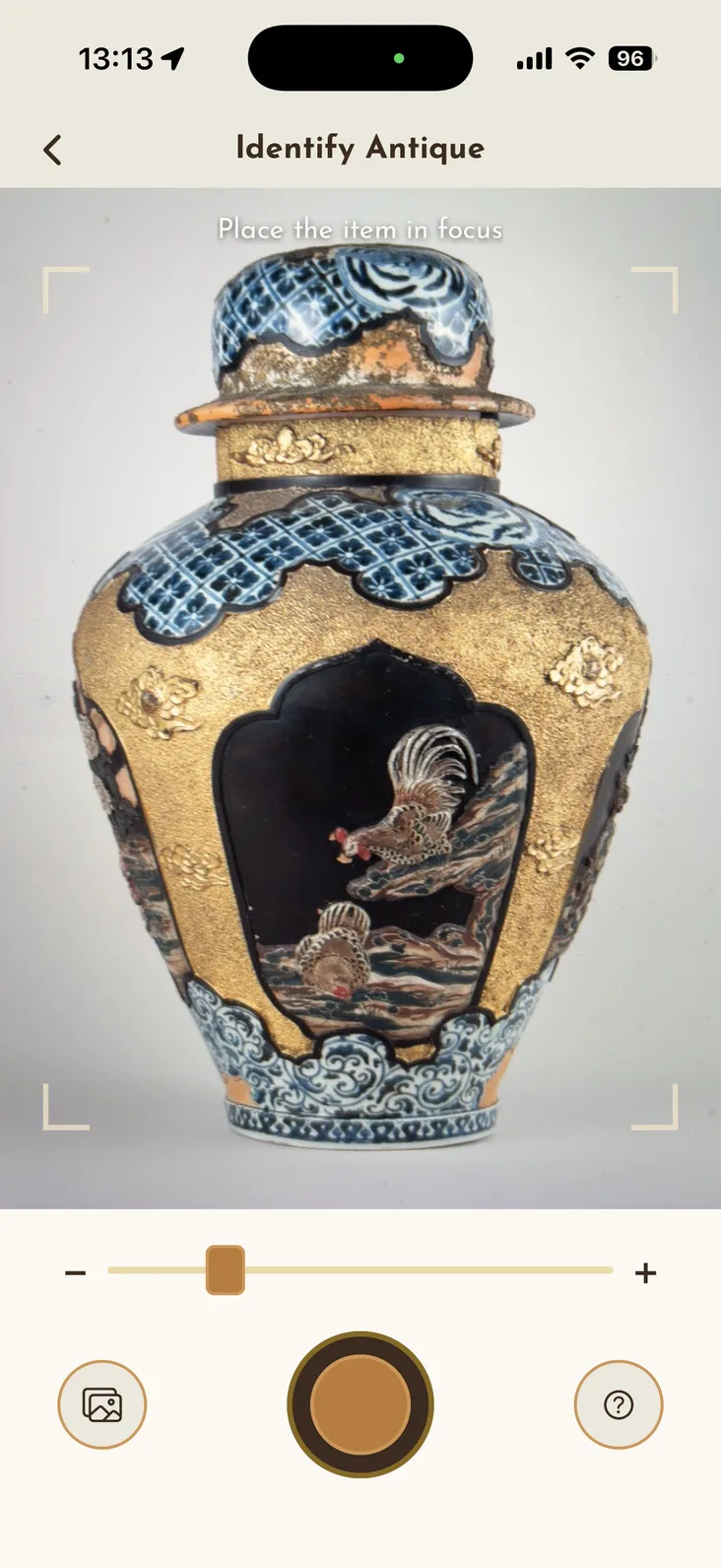
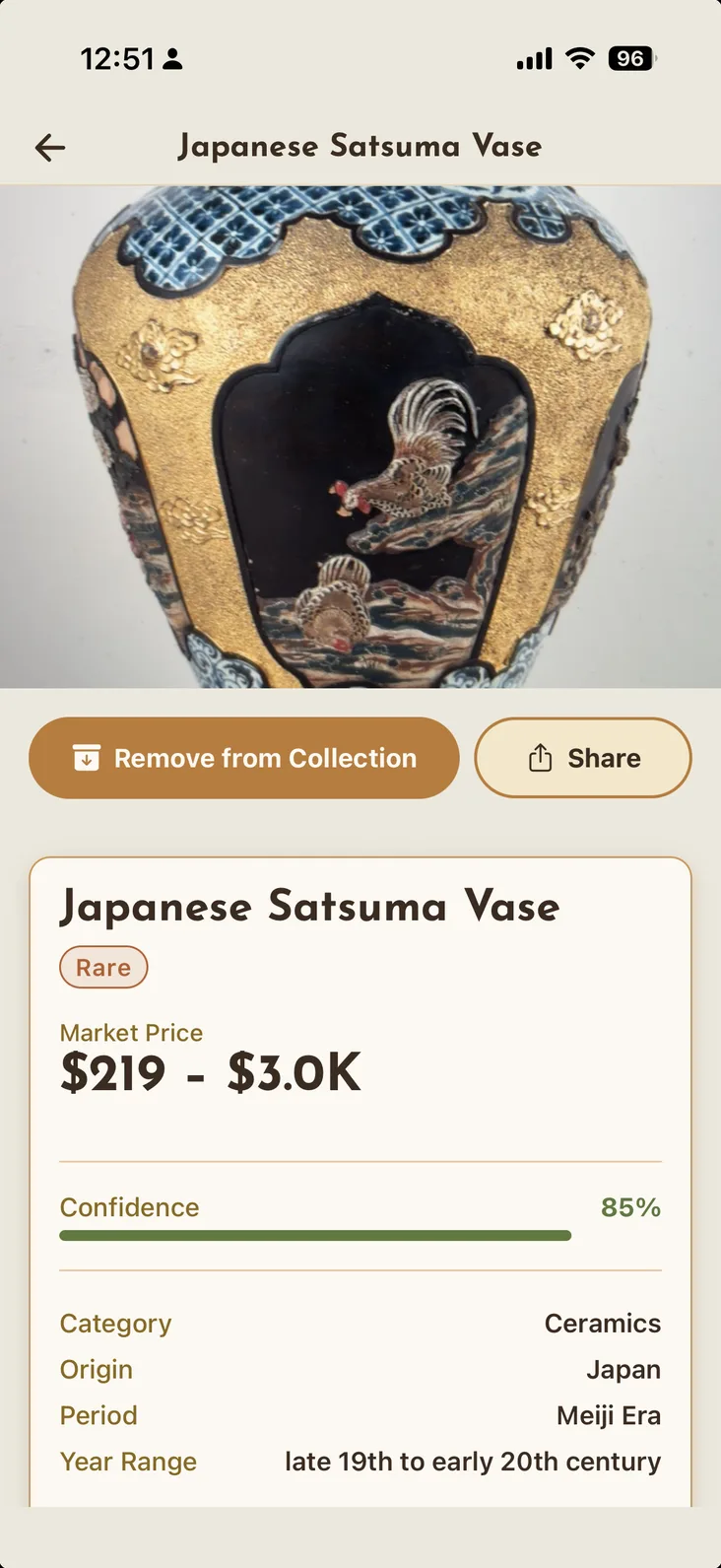
- Read the report. You get the name, origin, period, a rarity class and an estimated value range in your currency, with a confidence score.
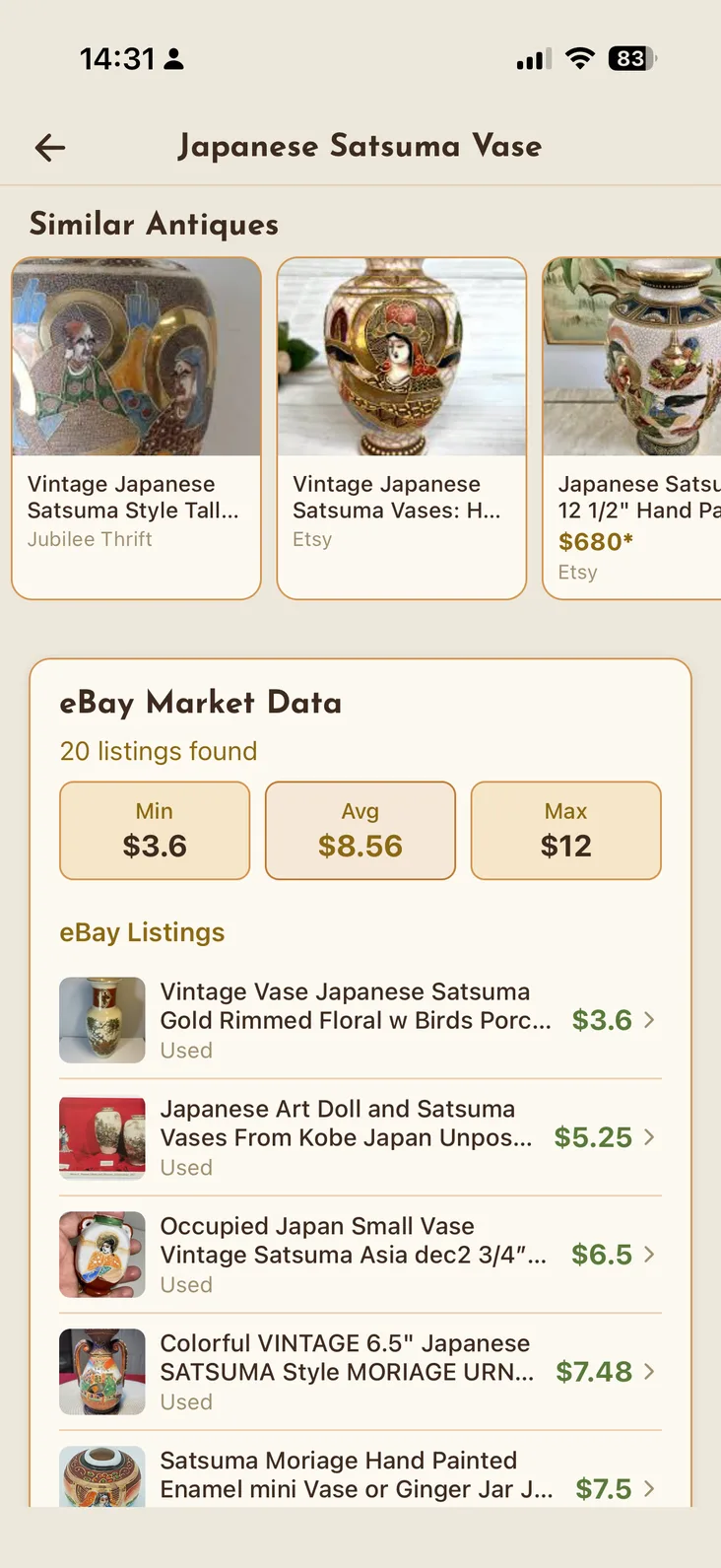
- Open the similar pieces to see the listings behind the range. Then, if you're planning to sell, search the same name on eBay's sold listings to see what buyers actually paid.
Values in the app are AI-generated estimates, not certified appraisals, based on similar items listed for sale at the time of the search. For insurance, probate or a sale, consult a qualified appraiser. More on how to read the range is in our antique value app guide.
Frequently asked questions
eBay's sold listings. Search for your item, tick "Sold items", and you see what real buyers paid, with dates and photos. Auction house results are the next best free source for better pieces. Printed guides are useful for identifying items but their prices date quickly. Start by making sure you know what the item is.
They are accurate about names, makers and patterns, and less reliable on prices. The figures are usually retail prices and were gathered months before printing, and the book may then be years old when you read it. Some categories have fallen a long way since. Use the book to identify, then check recent sold prices. Our valuation guide shows how.
Because they are different prices. Guides usually list what a shop might ask, while a dealer buying from you has to resell the piece and make a profit, so their offer will be well below that. Selling privately usually gets you something in between. See the three price levels for more.
Yes. Antique Snap identifies an item from a photo and gives an estimated value range from similar pieces for sale on Etsy, eBay and at auction houses, with a confidence score. It is free to try and needs no account. Our antique value app guide explains how to read the range it gives you.
When the number has legal or financial weight: insurance, probate, a charitable donation or a significant sale. Those need a written appraisal from a qualified appraiser, which typically costs $50 to $200 per item. For everyday questions, a price guide or an app estimate is enough. Our free appraisal guide covers the options.
Look it up in fifteen seconds.
Free to try · No account needed · Cancel anytime
Download on theApp Store
On your computer? Scan with your iPhone camera to get the app.