How Much Is My Antique Worth?
Updated August 9, 2026 · 8-minute read
Your antique is worth what comparable pieces are actually selling for right now — not what a price book printed in a better year hoped, and not what a similar item is optimistically listed for. Finding that number takes three moves: identify the piece precisely, find what true comparables sold for, then adjust for condition and rarity. This guide walks through each move, and ends with the fifteen-second version.
If you'd rather start with the shortcut: photograph it with Antique Snap and get an estimated range built from live marketplace listings.
First, know exactly what you have
Valuation punishes vagueness. "Victorian chair" returns a thousand unrelated prices; "circa-1870 walnut balloon-back chair" returns a market. Every detail you pin down — maker, period, material, pattern name — narrows the comparables and firms up the number, which is why identification always precedes valuation. If you haven't identified the piece yet, start with our five-step identification method, and for silver specifically, the hallmarks guide — a decoded hallmark can move a valuation from "old teapot" to "Birmingham 1892, known maker" in one step.
Find what comparable pieces actually sold for
The single most useful trick in this guide: on eBay, search your item, then tick the "Sold items" filter. Asking prices are wishes; sold prices are facts. An item can sit listed at $400 for years while identical pieces quietly change hands at $85. Auction records tell the same truth at the higher end of the market. Weight recent sales most — a comp from five years ago describes a different market, because whole categories drift: much traditional "brown furniture" has fallen for two decades while mid-century design climbed. Save screenshots of the comps you find — they're your evidence when you list the piece, negotiate with a dealer, or brief an appraiser.
A true comparable matches four things: what it is, when it's from, what condition it's in, and where it's selling. Miss one and the price transfers badly. Venue matters more than beginners expect: the same piece fetches different money on eBay, at a regional auction, in a dealer's shop and at a specialist sale, because each venue draws a different buyer. When your comps disagree wildly, the venue is usually why.
Adjust for condition and rarity
Condition moves antique prices more than almost anything else. A hairline crack can halve a ceramic's value; a chip or a bad repair can do worse. With furniture the trap runs the other way: untouched original finish commands a premium, and a well-meant refinishing job can strip real money off a genuinely old piece. Completeness counts too — lids, keys, original boxes, pairs kept together.
Inspect like a buyer before you price like a seller: run a fingernail around ceramic rims for chips, hold pieces up to strong light for hairlines (a "ping" test — a gentle flick — sounds dull on cracked porcelain), look for colour mismatches that betray old repairs, check whether hardware and finials are original or replaced, and note any "marriage" — a top and base that started life on different pieces. Every flaw you find first is a discount you won't be surprised by later.
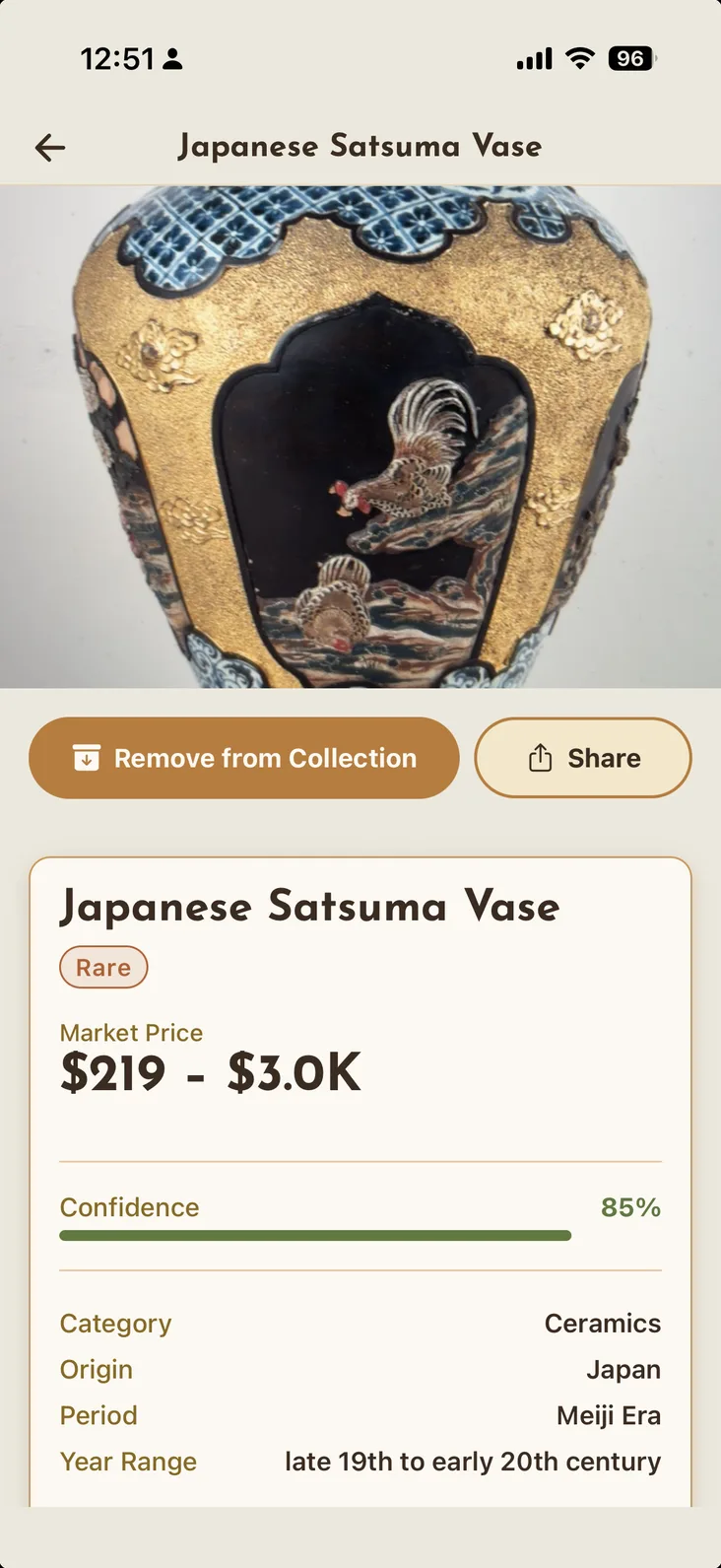
Then rarity: short production runs, fragile survivors, famous makers, documented provenance. Antique Snap grades every identification on a rarity scale from Common up to Museum Piece, alongside the estimate. A worked example of the full report: a George III silver candlestick — Rare — estimated $2,400–$3,800 at 92% confidence, London, 1785–1795. That's what "identified, then valued" looks like in practice.
Know which of the three price bands you need
"What's it worth?" has three honest answers, and confusing them causes most valuation arguments:
- Auction or wholesale value — what you'd get selling it quickly to the trade or at auction. The lowest band; a dealer pays this because resale risk is theirs.
- Fair market / retail value — what a willing buyer pays a dealer or private seller with time to find each other. The number sold-listing comps approximate.
- Insurance replacement value — what replacing the piece at retail, quickly, would cost. The highest band, and the one insurers work from.
Decide which question you're actually asking before you argue with a number.
When to pay for a professional appraisal
A certified appraisal — typically $50–$200 per item — is worth it exactly when the number carries legal or financial weight: insuring a significant piece, probate and estate division, donation deductions, or a major sale. For the everyday question — "is this shelf find worth anything?" — an appraisal costs more than most answers are worth. When you do book one, look for membership of a recognised appraiser organisation and make sure the fee is flat, never a percentage of the valuation — a percentage fee pays the appraiser to inflate the number. Arrive with your identification and comps; you'll spend the appraiser's hour on judgment instead of lookup.
The lookup is the bottleneck. Remove it.
Everything above depends on knowing the right search words and having the hours to comb sold listings — per object. That's the friction. Antique Snap collapses the whole loop: one photo returns the identification, the rarity class, and an estimated value range built from comparable pieces live on Etsy, eBay and auction houses — in about fifteen seconds. You can open the comparables yourself and check its work.
Stop guessing. See the live number.
Identification, rarity and an estimated value range from live marketplace comps — free to try, no account needed.
Download on theApp StoreGet a live estimate from one photo
- Photograph the piece — whole object, then any marks. The more the photo shows, the tighter the estimate and the higher the confidence score (see what the score measures).
- Read the report — identification, origin, period, rarity class and the estimated value range, converted to your currency (21 supported).
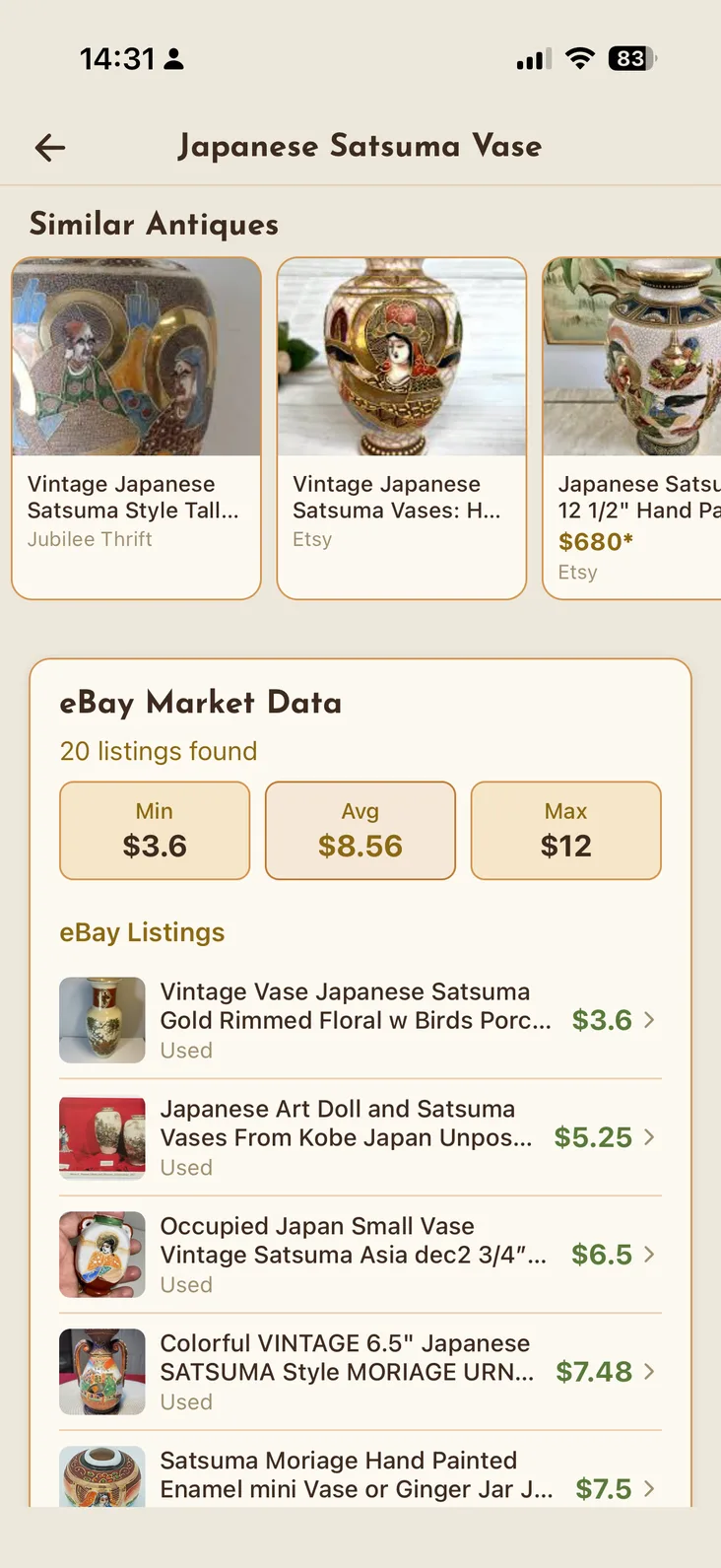
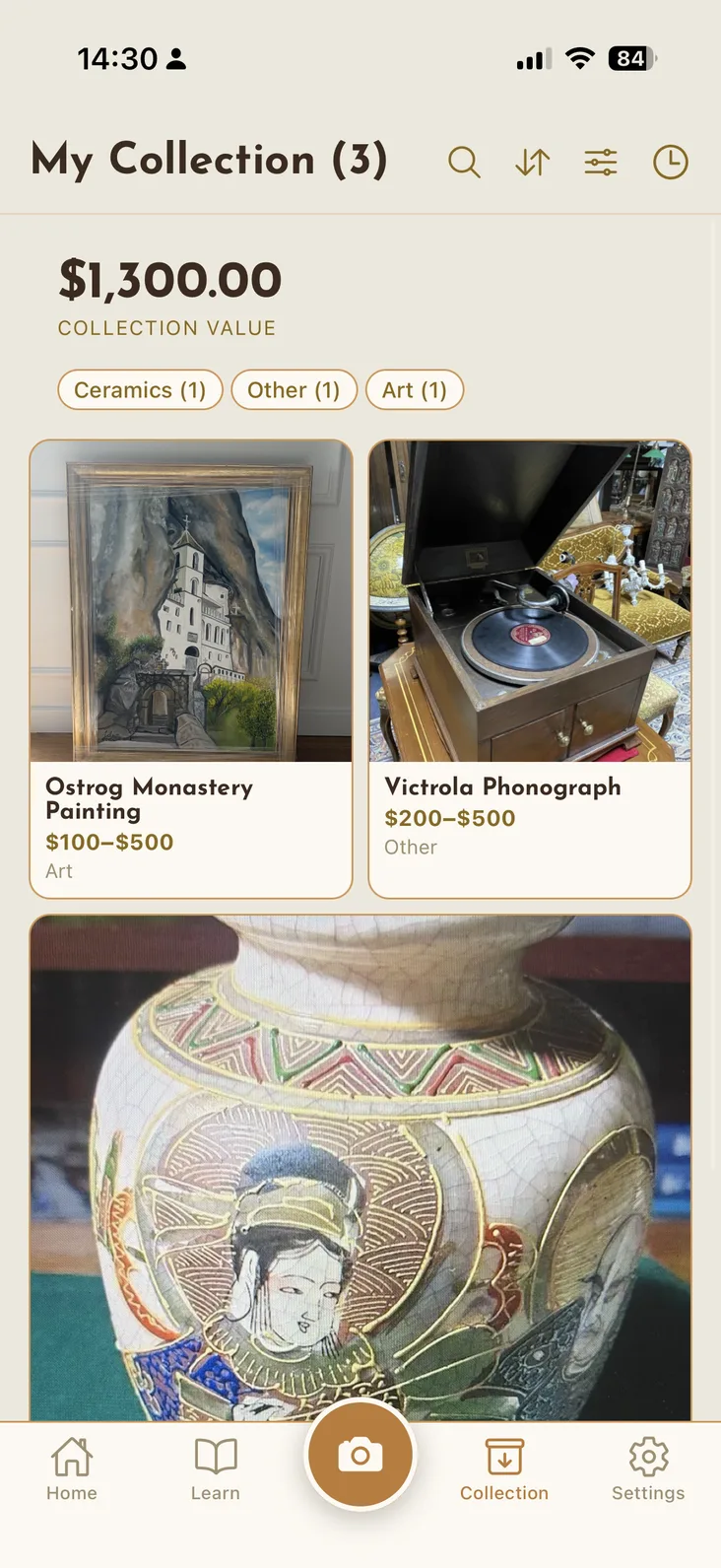
- Open the comparables — the Similar Items view lists the live Etsy, eBay and auction listings behind the range, so the number is checkable, not oracular. Every scan saves to My Collection with a running total.
The honest fine print: Antique Snap returns AI-generated estimates, not certified appraisals. Value ranges reflect comparable items found on live marketplace listings at the time of the search and are not offers to buy or sell. For insurance, probate or sale, consult a qualified appraiser — the report makes an excellent head start for that conversation.
Frequently asked questions
No. Age is the cheapest ingredient of value — millions of century-old objects survive in attics precisely because nobody wants them. Value comes from rarity, demand and condition together. Start by identifying what you actually have; the market verdict follows from there.
Identify the piece precisely, then check eBay's sold-listings filter for what comparables actually fetched. Antique Snap is also free to try — one photo returns an identification and an estimated range from live comps, no account needed.
Price guides print retail asking prices from a past year. A dealer buying from you pays wholesale — often a third to half of retail — because the resale costs and risk are theirs. Markets also move between printings, which is why live comparables beat static guides.
When the number has legal or financial standing: insurance, probate, donation deductions, or a significant sale. Expect roughly $50–$200 per item. Bring your identification evidence — the app's report is a strong head start, not a substitute.
Low surviving numbers relative to demand: short production runs, fragile materials, famous makers — for silver, a decoded maker's mark can multiply value — unusual variants, or documented provenance. Rare only pays when collectors actually compete for it.
Find out what the shelf is actually worth.
Free to try · No account needed · Cancel anytime
Download on theApp Store
On your computer? Scan with your iPhone camera to get the app.