Antique Value App: What It Can Tell You About Price
Updated October 1, 2026 · 8-minute read
An antique value app tells you roughly what an object is worth from a single photo. It does that in two moves. First it works out what the item is, then it finds comparable pieces for sale right now and builds a price range from them. Antique Snap does both in about fifteen seconds, and every result comes with a confidence score so you know how much weight the number can carry.
Treat that range as a starting point. This guide explains how an app gets to its number, how to read the range it gives you, where app values go wrong, and when you still need a qualified appraiser. If you only came for the app, get Antique Snap on the App Store. It's free to try and you don't need an account.
How an antique value app works out a price
Every value app, ours included, has to do the same four jobs in the same order. Once you know what they are, it gets much easier to judge the number you get back.
1. It identifies the item first
Price follows identity. A blue and white vase could be a modern decorator piece or a nineteenth-century export piece worth many times more, and no amount of pricing logic can fix a wrong name. So the app starts with what the photo shows: shape, decoration, materials, construction, wear and any marks on the base. If the identification is shaky, everything after it is shaky too. We cover that side in detail in our guide to what an antique identifier app has to get right. This page picks up where identification ends.
2. It looks for similar pieces for sale
With a name, a period and a material in hand, the app searches for pieces that match. Antique Snap pulls them from current listings on Etsy, eBay and auction houses. Some tools use a fixed price list instead. A price list was right on the day it was made and gets a little more out of date every month, because some kinds of antiques go up in demand while others go down. Current listings show what people are asking this week.
3. It turns those prices into a range
No two antiques are exactly alike, so one exact figure would be misleading. You get a low end and a high end based on what the matching pieces are listed for. A narrow range usually means those pieces are priced much the same. A wide one usually means there are only a few of them for sale, or they differ a lot in condition and quality.
4. It tells you how sure it is
Antique Snap puts a confidence score on every result, next to a rarity class that runs from Common up to Museum Piece. The score reflects how much the photo actually showed. A clear shot of a marked base scores far higher than a dim photo of one side. Under 50%, treat the result as a lead to research rather than an answer.
Those four steps are what you would do by hand, just much faster. If you'd rather do it yourself, our guide to what your antique is worth shows how to check sold prices, condition and rarity, and the five-step identification method handles the first step.
How to read the value range you get
Getting a number is the easy part. Knowing what to do with it takes a little more care.
- It is built from asking prices. The range comes from pieces that are listed for sale now. Sellers usually ask for more than buyers end up paying, so if you want a quick sale, expect to land in the lower half of the range or under it. To see what actually changed hands, search the same name on eBay and filter by sold items.
- It is a shop price, not what a dealer will pay you. A dealer buying from you still has to sell the piece on and make a profit, so their offer will be well below the price in a shop or online listing. That's normal, and it doesn't mean the app got it wrong.
- Condition is the photo's blind spot. A hairline crack, a replaced drawer pull or a refinished top can move the price a lot, and none of them may show up in a photo. If you know your piece has damage or repairs, adjust down.
- The confidence score tells you how far to trust the rest. High confidence with a narrow range is a number you can work with. Low confidence with a wide range is a prompt to take another photo.
A second scan takes seconds and often sharpens the answer. Photograph the whole piece in daylight, then the base, any signature, label or hallmark, and a close-up of the decoration. Marks do more for an identification than anything else. For silver, our hallmarks guide shows exactly where to look.
Estimates, not certified appraisals. Antique Snap returns AI-generated estimates. Value ranges reflect comparable items found on live marketplace listings at the time of the search and are not offers to buy or sell. For insurance, probate or sale, consult a qualified appraiser.
Where app values go wrong
No app prices every object correctly. These are the situations where you should be most careful with the number.
- Reproductions. Some copies were made to look old on purpose, and a good one can fool a photo. Even, all-over wear, pale fresh wood inside a drawer and marks that look too crisp are the usual giveaways.
- Pieces that were put together or changed later. A bookcase top sitting on a base it didn't start life with, or a lamp made from an old vase. The photo shows one object, but buyers pay much less for pieces like this, and the similar listings may not show that.
- Very rare items. When only a handful of similar pieces are for sale anywhere, the range has very little to go on. A high rarity class is a good hint that you're in that territory, and that's exactly when a specialist is worth paying.
- Local markets. Prices on international marketplaces don't always match what a local auction or shop will pay. Some categories simply sell better in one country than another.
None of this makes the app unreliable. It means the number is evidence, and you should weigh it like evidence. In Antique Snap you can open the similar pieces it found and check whether they really match yours. If they don't, you'll know why the range looks off.
Value app, price guide or appraiser?
These three answer the same question in different ways, and they work best together.
- A value app is fast and current. It's the right first step for a box of estate items, a flea market find before you hand over cash, or a collection you want to keep a running total on. Its limits are what the photo shows and what the market has listed.
- A printed price guide is good for learning names, makers and patterns. Its prices are from the year it was printed and are usually shop prices, so use it to learn what things are called more than to price them.
- A qualified appraiser examines the piece in person and puts their name to the figure. A written appraisal typically costs $50 to $200 per item, and it's the one you need for insurance, probate, donations or a significant sale. Look for a flat fee, never a percentage of the value, and membership of a recognized body such as the American Society of Appraisers.
A sensible order is to scan everything with the app, set aside the pieces that come back rare or valuable, and take only those to an appraiser with the report in hand.
Pricing one piece by hand takes an evening
You can do all of this without an app. Work out what the piece is, find the right search terms, go through listings and sold results, throw out the ones that don't match, then adjust for condition. For one object that's an evening. For a house full of objects it's weeks. The hardest part is usually the vocabulary: you can't search for a balloon-back chair if you don't know that's what you're looking at.
Antique Snap runs the same checks from one photo. It reads marks, shape, materials and wear, then finds similar pieces for sale, in about fifteen seconds. What you do with the answer is still up to you.
See what it's worth before you decide.
Identification, rarity and a value range from current listings. Free to try, no account needed.
Download on theApp StoreHow to get a value from one photo
- Photograph the piece. The whole object first, then the base and any mark. There's no sign-up screen, so you can scan straight after installing.
- Read the report. You get the name, origin, period, materials, rarity class and an estimated value range, with a confidence score beside it. Prices show in your own currency, and 21 are supported.
- Check the similar pieces. Open Similar Items to see the Etsy, eBay and auction listings behind the range. If they match your piece, the range is on solid ground.
- Keep it in My Collection. Every scan is saved, sorted by category and added to a running total. Useful when you're working through an estate or keeping track of what you've bought.
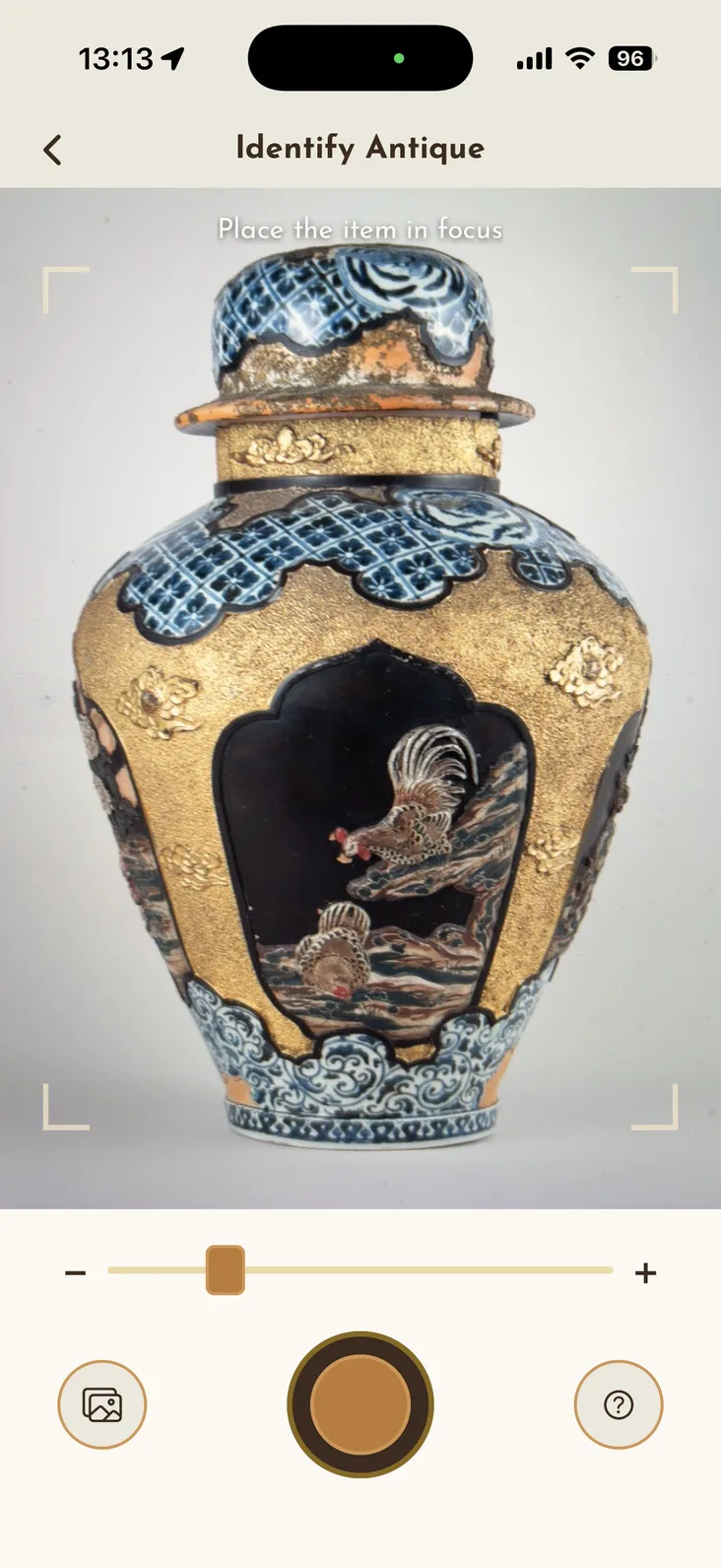
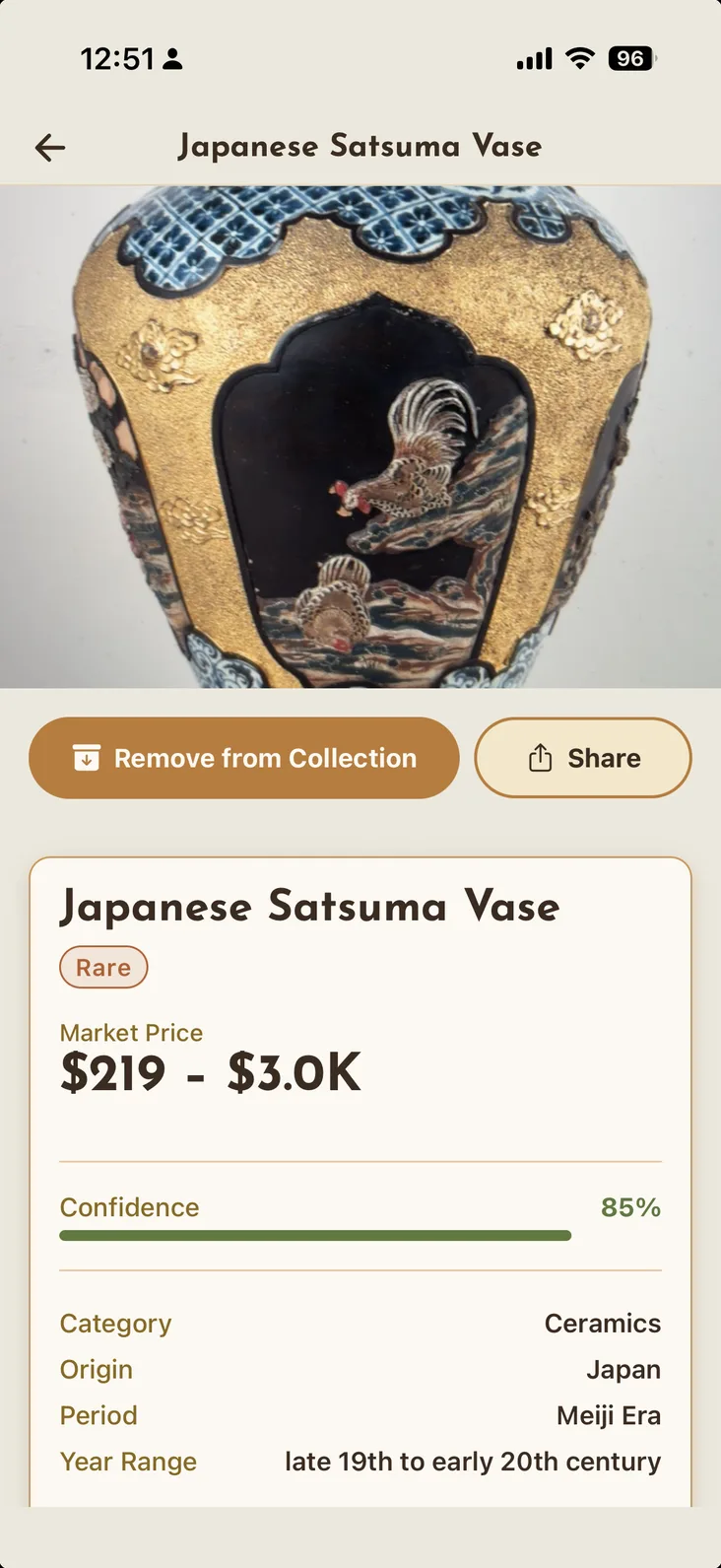
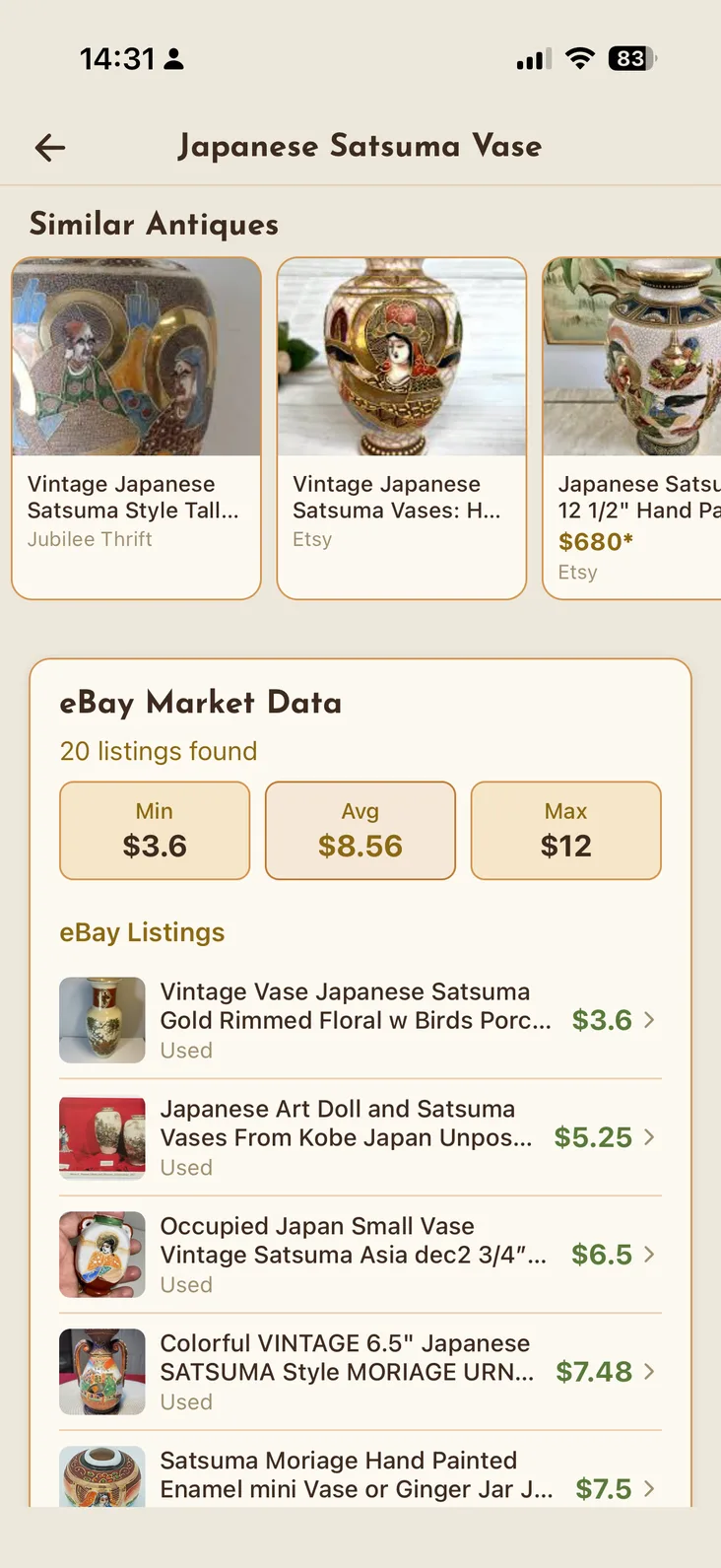
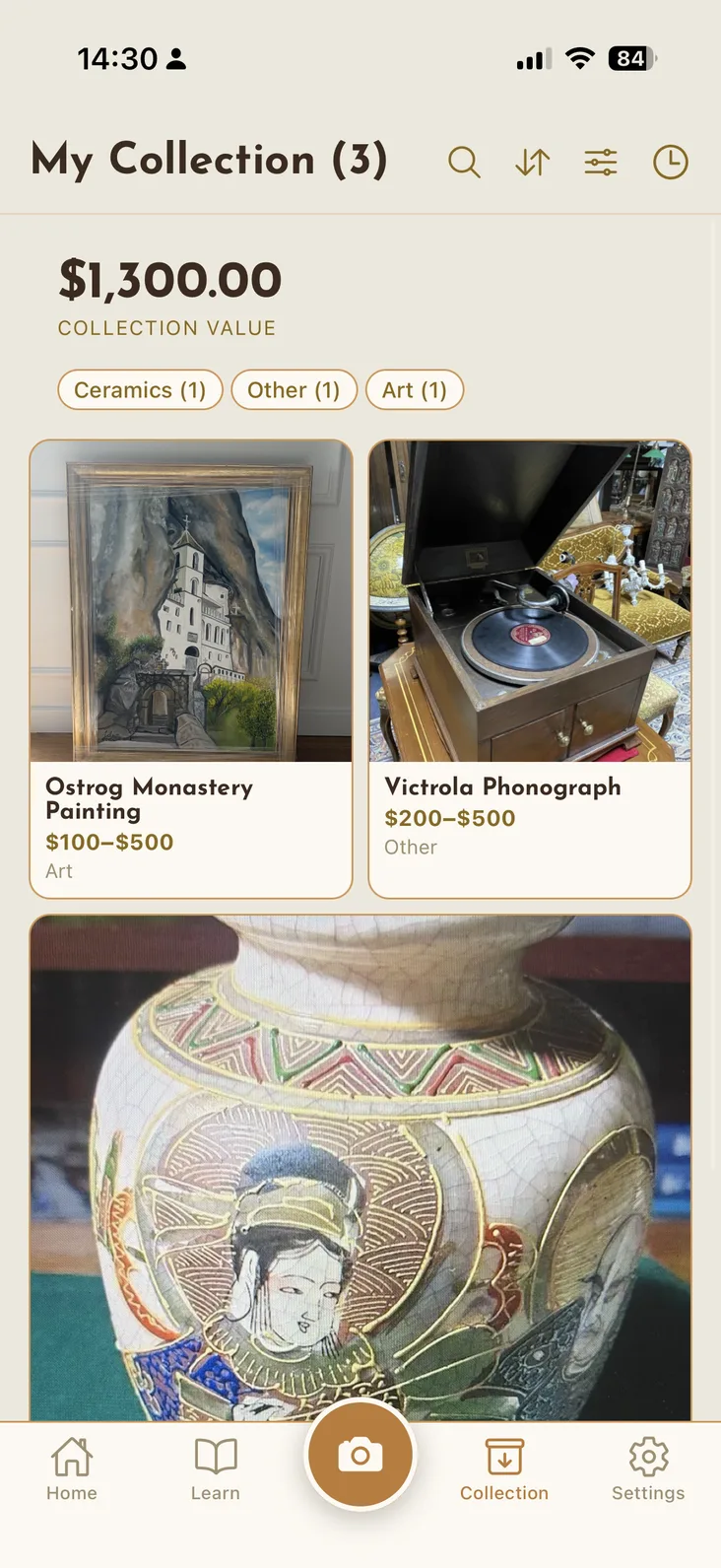
Here's a worked example from the app: a George III silver candlestick, graded Rare, estimated at $2,400 to $3,800 with 92% confidence, London, 1785 to 1795. That's what a strong result looks like. The name is specific, the period is narrow, and the confidence is high enough to act on. For more guides on identifying and valuing what you own, browse the full guides library.
Frequently asked questions
Yes. Antique value apps like Antique Snap identify an item from a photo and estimate its value from comparable pieces currently for sale. Antique Snap uses listings on Etsy, eBay and auction houses and shows a confidence score with every result, so you can see how much the photo gave it to work with. It is currently iPhone and iPad only. See how it works on the homepage.
Antique Snap is free to download and try, with no account and no card needed to start. Full access is a weekly or yearly subscription billed by Apple, and the App Store shows the price in your currency before you confirm. Our free antique identification app guide explains what free gets you, and the pricing page covers billing and cancelling.
As accurate as the identification and the similar pieces it finds. A clear photo of a marked piece with plenty of similar listings gives a narrow, dependable range. A rare item, a reproduction or a blurry photo gives a wider, weaker one. Antique Snap's confidence score tells you which case you are in. Below 50%, treat the result as a lead to research. More on what the score measures is on our accuracy page.
For deciding what to do next, yes. For anything with legal or financial weight, no. Insurance, probate, donations and major sales need a written appraisal from a qualified appraiser. The app's report is still useful there: you arrive knowing what the piece is and what similar ones are listed for. Our valuation guide explains the different price figures an appraiser may give you.
Antique Snap covers 18 categories: furniture, jewelry, ceramics, art, silver, glass, textiles, coins, watches, books, toys, cameras, militaria, clocks, instruments, stamps, prints and other. Results are strongest when the photo shows marks, labels or signatures, so photograph those whenever your piece has them. Our identification guide shows where each category hides its marks.
Point your camera at it and see the number.
Free to try · No account needed · Cancel anytime
Download on theApp Store
On your computer? Scan with your iPhone camera to get the app.