How to Identify Antique Silver Hallmarks
Updated August 9, 2026 · 9-minute read
Turn the piece over, find the little cluster of stamped symbols, and read them in order: a fineness mark that tells you if it's solid silver, an assay-office mark that tells you where it was tested, a date letter that tells you when, and a maker's mark that tells you who. Two instant wins before we go deeper: a walking lion (the "lion passant") or the words "STERLING" or "925" mean solid silver; "EPNS" or "EPBM" mean silverplate.
That's the whole system in one paragraph — the rest of this guide teaches you to actually decode each mark, and what to do when they're worn, foreign or missing. Or photograph the marks and let Antique Snap read them for you in about fifteen seconds.
Where to find the hallmarks
Silver marks hide in consistent places. On flatware — spoons, forks — check the back of the handle, especially near the neck where handle meets bowl. On hollowware — teapots, bowls, candlesticks — turn the piece over and search the underside near the rim. On jewelry, check clasps, ring bands inside, and brooch pin fittings. The stamps are often tiny and worn; a magnifying glass or your phone camera zoomed in makes the difference between "some squiggles" and an answer.
Reading British hallmarks — the deepest system
Britain has assayed silver for centuries with the most rigorous and decodable marking system in the world. A full British hallmark reads like a sentence, in four parts:
The standard mark
The lion passant — a lion walking left, one paw raised — certifies sterling: 92.5% pure silver. Rarer is the figure of Britannia, which marks the higher 95.8% Britannia standard. If you find either, the metal question is settled.
The assay-office mark
A second symbol names the office that tested the piece: a leopard's head for London, an anchor for Birmingham, a crown (later a rose) for Sheffield, a castle for Edinburgh. The office matters for decoding the date letter — and pieces from smaller, long-closed offices can carry a premium with collectors.
The date letter
A single letter of the alphabet, changed every year, cycling through typefaces and shield outlines. Matched against the correct office's table, it pins the piece to one year — 1785, not "Georgian-ish". The catch: every office ran its own independent cycles, so the same letter "G" means different years in London and Birmingham. This is where manual decoding gets slow.
The maker's mark
The silversmith's initials in a shaped punch. Famous makers — Hester Bateman, Paul Storr, Georg Jensen for the Danes — multiply value several times over, which is exactly why their punches are the most faked marks in the trade.
American, continental and other marks
Outside Britain the systems are looser but readable. American solid silver says so in words: "STERLING" or "925/1000" (roughly post-1860s); earlier American "coin silver" is about 90% pure and often carries just a maker's name. Continental Europe stamps fineness numbers — 925, 835, 830 or 800 parts per thousand, the lower grades common in German, Dutch and Scandinavian work. France strikes a tiny Minerva head for solid silver; Germany after 1888 uses a crescent moon and crown beside the number; Imperial Russia used the zolotnik system, where "84" means roughly 87.5% pure. The rule of thumb: a number over 800, or a national assay symbol, means solid silver; a name alone means keep checking.
Sterling or silverplate?
Most disappointment in inherited silver comes down to this distinction, and the marks usually settle it. Silverplate — a thin electroplated layer over base metal — announces itself with EPNS (electroplated nickel silver), EPBM (electroplated Britannia metal), "A1", "quadruple plate" or a company name with no fineness number anywhere. Older "Sheffield plate" is silver fused over copper, collectable in its own right but still not solid. Beyond the marks, check the high points: on handles, spouts and feet, worn plate shows a yellowish or grey base metal peeking through, while solid silver simply polishes brighter. Plated pieces can still be lovely — but their value is decorative, not bullion, as our guide to what antiques are actually worth explains.
Spotting fake and transposed marks
A genuine hallmark was struck with a steel punch: the impression is crisp, sharp-edged, pressed into the metal. Cast fakes — made by molding a genuine marked piece — look soft, shallow and slightly raised, like a photocopy of a signature. Also watch for transposed marks: a disc of genuinely hallmarked silver cut from a small damaged piece and soldered into a larger, more valuable forgery. Breathe on the area — condensation often reveals the solder seam around an inserted mark. And always let the object vote: a hallmark dated 1770 on a piece whose style and construction scream 1900 is lying about something. The same cross-checking logic runs through our five-step identification method.
The decoding is mechanical. The looking-up is the slow part.
Everything above is learnable in an afternoon. What eats the hours is the reference work: finding the right assay-office table for the date letter, then searching databases of tens of thousands of maker's punches for two worn initials in a lozenge. For one spoon, it's a pleasant rabbit hole. For a drawer of inherited silver, it's a lost weekend.
Antique Snap reads the whole cluster from one photo — standard mark, office, date letter, maker — and returns the identification with an estimated value range from live market listings, in about fifteen seconds per piece.
Photograph the marks. Skip the reference books.
One clear photo of the hallmark cluster returns the maker, period, origin and an estimated value range — free to try, no account needed.
Download on theApp StoreHow to read a hallmark with one photo
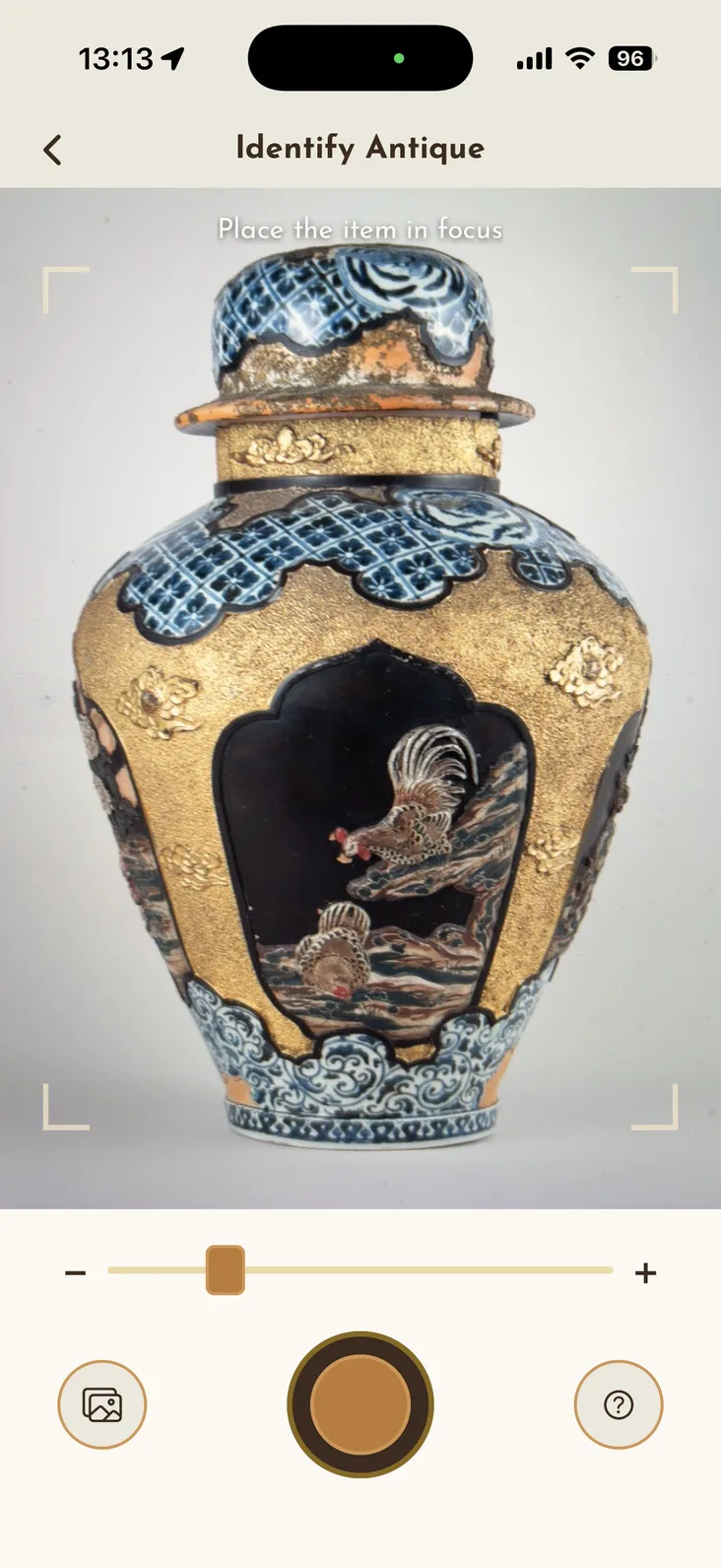
- Shoot the whole piece first, then a close, well-lit shot of the mark cluster. Raking light — light from a low angle — makes worn stamps jump out.
- The AI reads the evidence: the marks themselves, plus the form, style and wear of the piece, so a doubtful mark gets cross-examined instead of taken on faith.
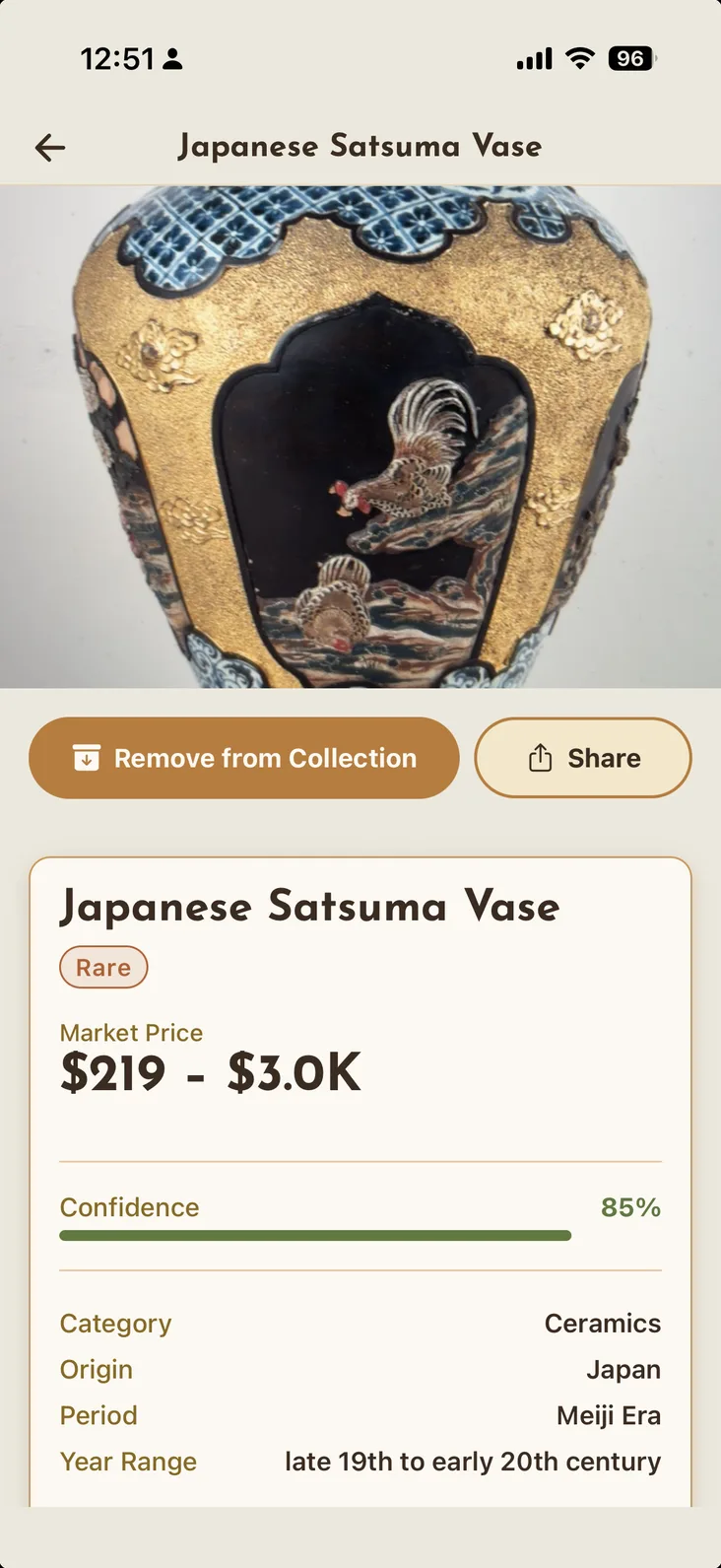
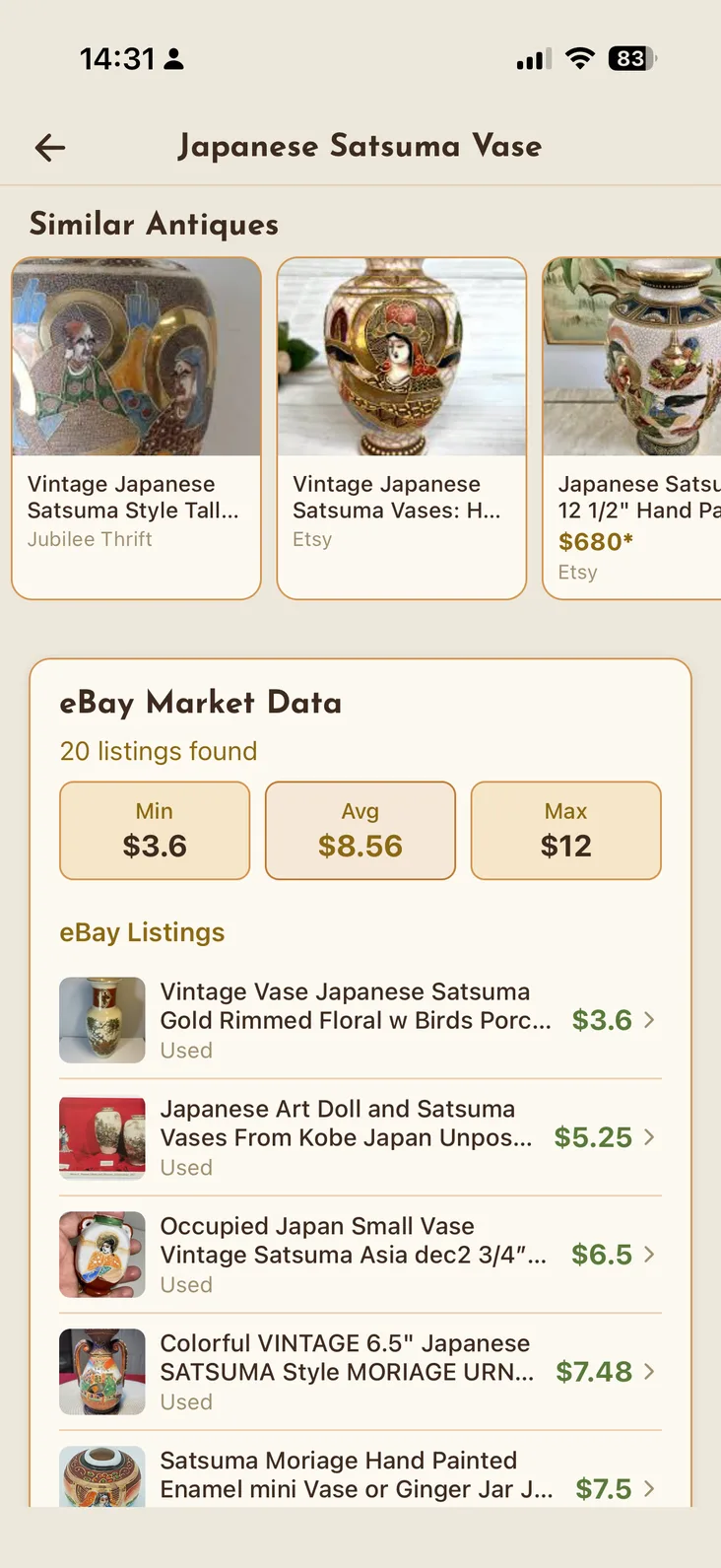
- You get the report: identification, origin, period, rarity class and an estimated value range drawn from comparable pieces on Etsy, eBay and auction houses — estimates, not certified appraisals, with a confidence score attached.
Frequently asked questions
A walking lion — the lion passant — is the British standard mark for sterling silver (92.5% pure). It's the single most reassuring mark you can find: it means the metal was assayed and passed. It appears alongside an assay-office mark, a date letter and the maker's initials, as covered above — or get the whole cluster read from one photo.
EPNS means electroplated nickel silver — a thin silver layer over base metal — so it carries no bullion value. Well-made or unusual plated pieces still sell as decorative objects, but expect tens of dollars, not the hundreds comparable sterling brings. Our valuation guide explains how condition and rarity move the number.
Look for a fineness indicator: "STERLING", "925" or a lion passant means solid; EPNS, EPBM, A1 or no fineness mark at all points to plate. Then check the high points — plate wears through to yellowish or grey base metal on handles, spouts and feet, while solid silver just polishes brighter. A photo of both the piece and its marks in an identifier app settles it fastest.
British assay offices stamped a letter that changed every year, cycling through typefaces and shield shapes. Matched against the right office's table it dates a piece to a single year — but each office ran its own cycles, which is why manual decoding means finding the correct table first. The broader dating toolkit is in our five-step identification guide.
No. Plenty of genuine silver is unmarked — early American and colonial work, some continental pieces, and items where marks simply wore away. Unmarked silver is identified by construction, style and wear instead, using the full five-check method; it just demands more evidence before a buyer pays solid-silver prices.
A drawer full of silver shouldn't cost you a weekend.
Free to try · No account needed · Cancel anytime
Download on theApp Store
On your computer? Scan with your iPhone camera to get the app.