Free Antique Identification App: What "Free" Really Gets You
Updated August 9, 2026 · 7-minute read
Here's the straight answer to the search you just made: Antique Snap is a free antique identification app in the way that actually matters — free to download, free to try, no account, no sign-up, no card required to start. Unlimited full access is a paid subscription, stated plainly up front. This page maps the whole "free" landscape honestly: what our free tier includes, what any free identifier app can and can't afford to do, and the one method that's genuinely free forever.
Short on time? Download Antique Snap free and photograph your first mystery object now.
What's genuinely free in Antique Snap
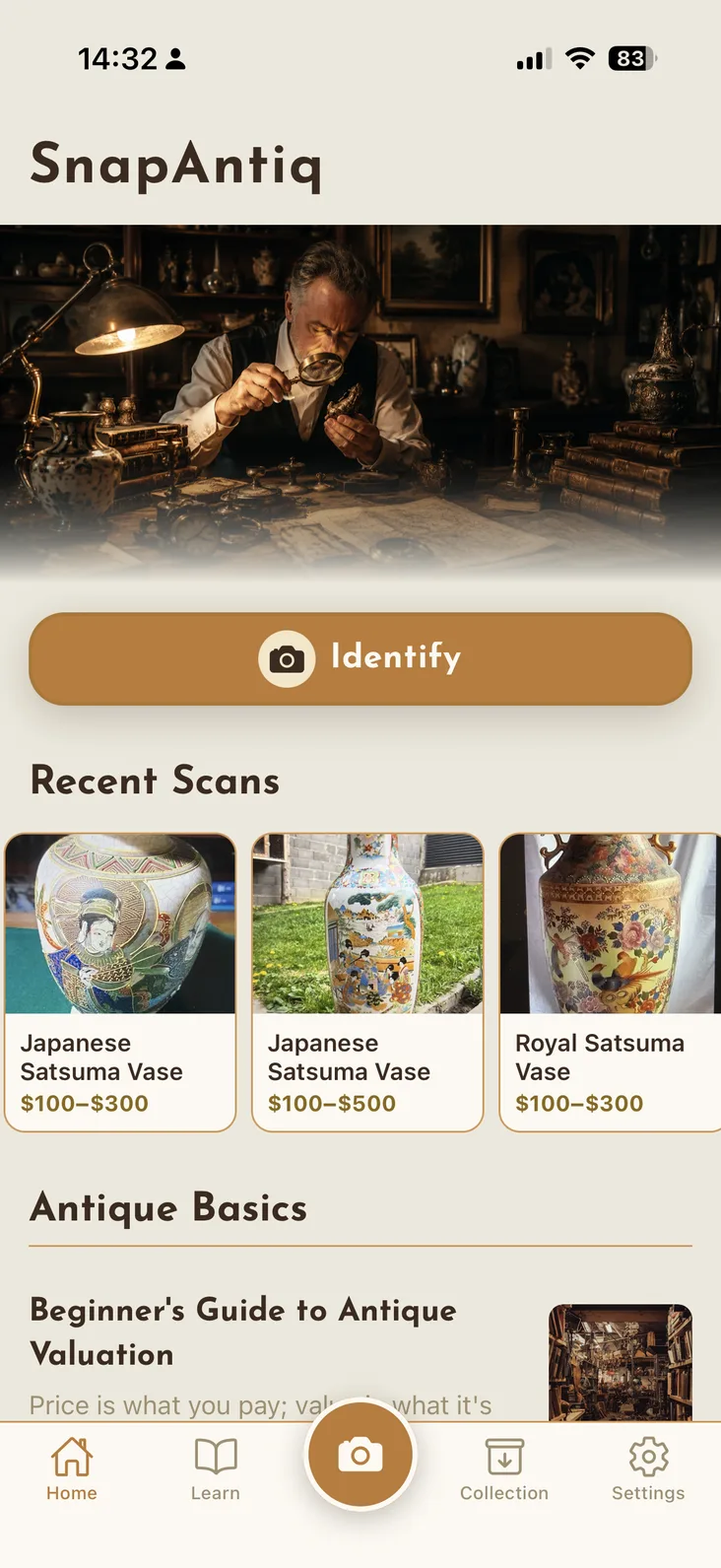
The free experience is the real product, not a demo reel. You download the app and photograph something — no registration screen between you and the answer. Identification runs exactly as it does for subscribers: the AI reads form, marks, materials and wear, and returns the name, origin, period, rarity class, confidence score and an estimated value range drawn from live marketplace listings. Your scans save to My Collection automatically, because the app creates an anonymous device-scoped session — a privacy design choice, not a growth hack: the App Store privacy label reports no data collected. Value ranges display in your own currency (twenty-one are supported) and the interface follows your device language automatically, with eleven available.
What the subscription unlocks, and how billing works
Full, unlimited access is an auto-renewing subscription billed through Apple, with the price shown in the app and on the App Store before you confirm (the full breakdown, including how refunds work, is on the pricing page). The weekly plan suits a burst of work — clearing one estate, pricing one box of inherited china — while the yearly plan is the obvious value if you hunt flea markets or build a collection. Billing runs entirely through Apple; cancelling is two taps in Apple ID → Subscriptions and there's no account of ours to close, because you never made one. No hidden tiers, no "credits", no surprise paywall after you've photographed your grandmother's clock.
How "free" identifier apps actually work
Worth knowing before you upload an heirloom photo to anything: real identification costs the developer money on every scan — AI vision processing and live market data aren't free to run. So every "free antique identification app" pays for itself one of three ways:
- Free trial, then a stated subscription — our model. You know the price before you commit anything.
- Ad-supported — free scans wrapped in advertising, which usually means your attention and behaviour are being sold instead, and the identification quality is rarely the point of the product.
- The quiet paywall — "free" in the store listing, then a payment screen that appears only after you've photographed your item and are invested in the answer.
None of these is a scandal — but an app that hides its pricing until after you've photographed your heirloom, or has no visible privacy policy, has answered the trust question for you. Whatever app you choose, check two things first: transparent pricing and a privacy label you'd accept. The full checklist for judging any of them is in our antique identifier app guide.
What a free scan actually tells you
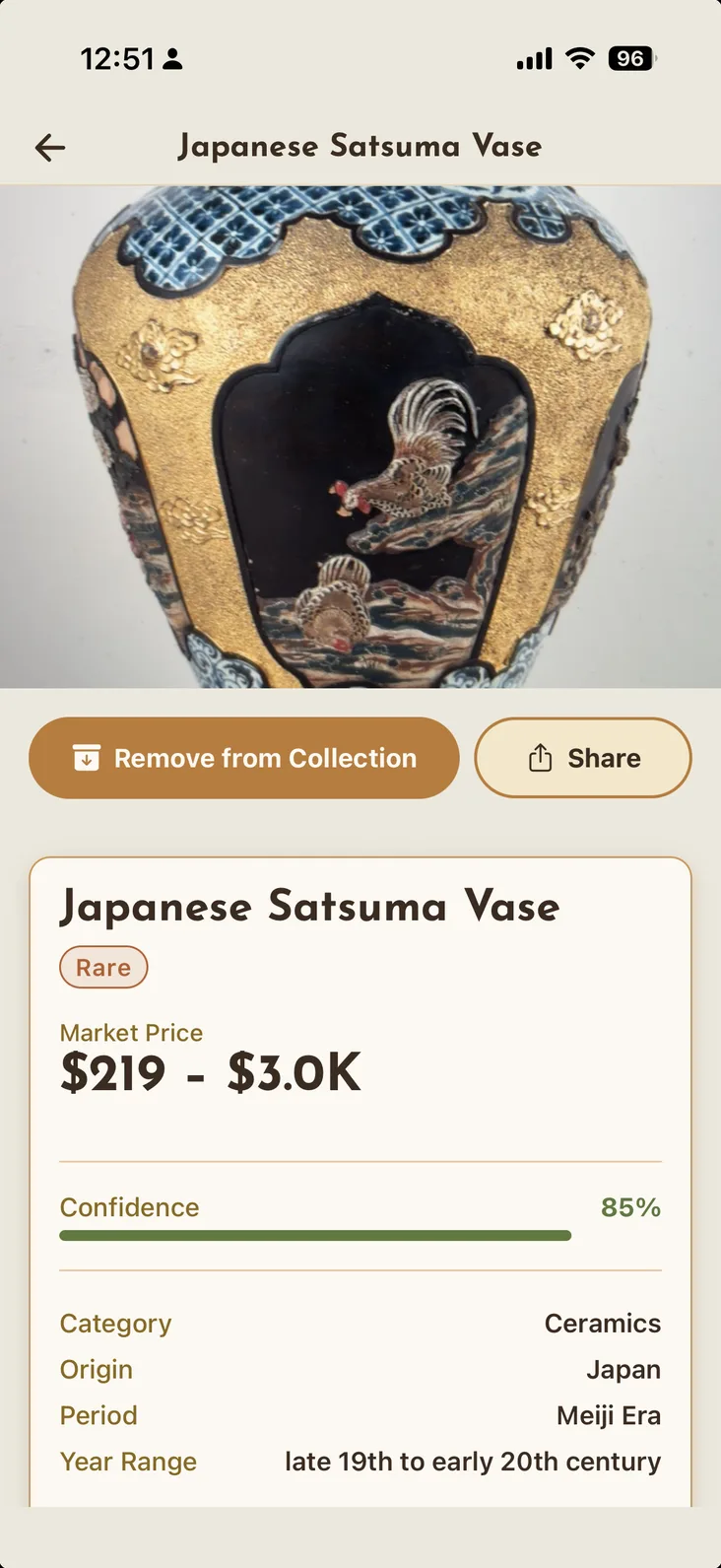
"Free tier" often means "teaser", so here's concretely what a first Antique Snap scan returns. Photograph, say, a decorated vase from a relative's shelf, and the report gives you: the identification (a Japanese Satsuma vase, for example), its origin and period, the materials, a rarity class on a scale from Common up to Museum Piece, an estimated value range drawn from comparable pieces listed on Etsy, eBay and auction houses at that moment, and a confidence score telling you honestly how much your photo showed — a clear shot of a marked base scores far higher than a blurry corner. That's the same report subscribers get, and it's exactly the information you'd otherwise assemble by hand over an evening. What the range means and how to act on it — selling venues, condition effects, when a paid appraisal makes sense — is covered in our guide to what antiques are worth.
The genuinely free alternative: identify it yourself
There is a method that costs nothing forever: the manual one specialists use. Read the marks, examine construction and materials, place the style and period, read the wear, then check eBay's sold listings for comparables. We teach the entire process in the five-step identification guide, with a deep dive on silver hallmarks — no app required, and everything in those guides works with a library card and patience.
The honest trade-off: patience is the price. The manual method runs about an evening per object once you're practised — longer while you're learning the vocabulary. Your local library likely holds the classic references too — price guides and antiques handbooks pair well with the five checks if you enjoy the research for its own sake. Free-as-in-money, not free-as-in-time.
Fifteen seconds, or an evening. Your call.
That's the real comparison this search comes down to. The manual method is free and genuinely works; the app runs the same checks — marks, form, materials, wear, live comps — from one photo, in about fifteen seconds, and your first try costs nothing either. The sensible move is to take the free trial, scan the object you're actually curious about, and decide with the answer in hand. What it's worth after that is a question our valuation guide covers in depth.
Your first identification is on us.
Download free, photograph the thing you can't name, and see the full report — no account, no card, no catch.
Download on theApp StoreTry it free in three steps
A tip for your first scan: pick the object you're genuinely curious about, not the easiest one — the free report is most valuable on the piece you'd otherwise spend an evening researching. If it has a mark on the base, photograph that too.
- Download and open — no sign-up screen; you land on the home screen with the Identify button ready.
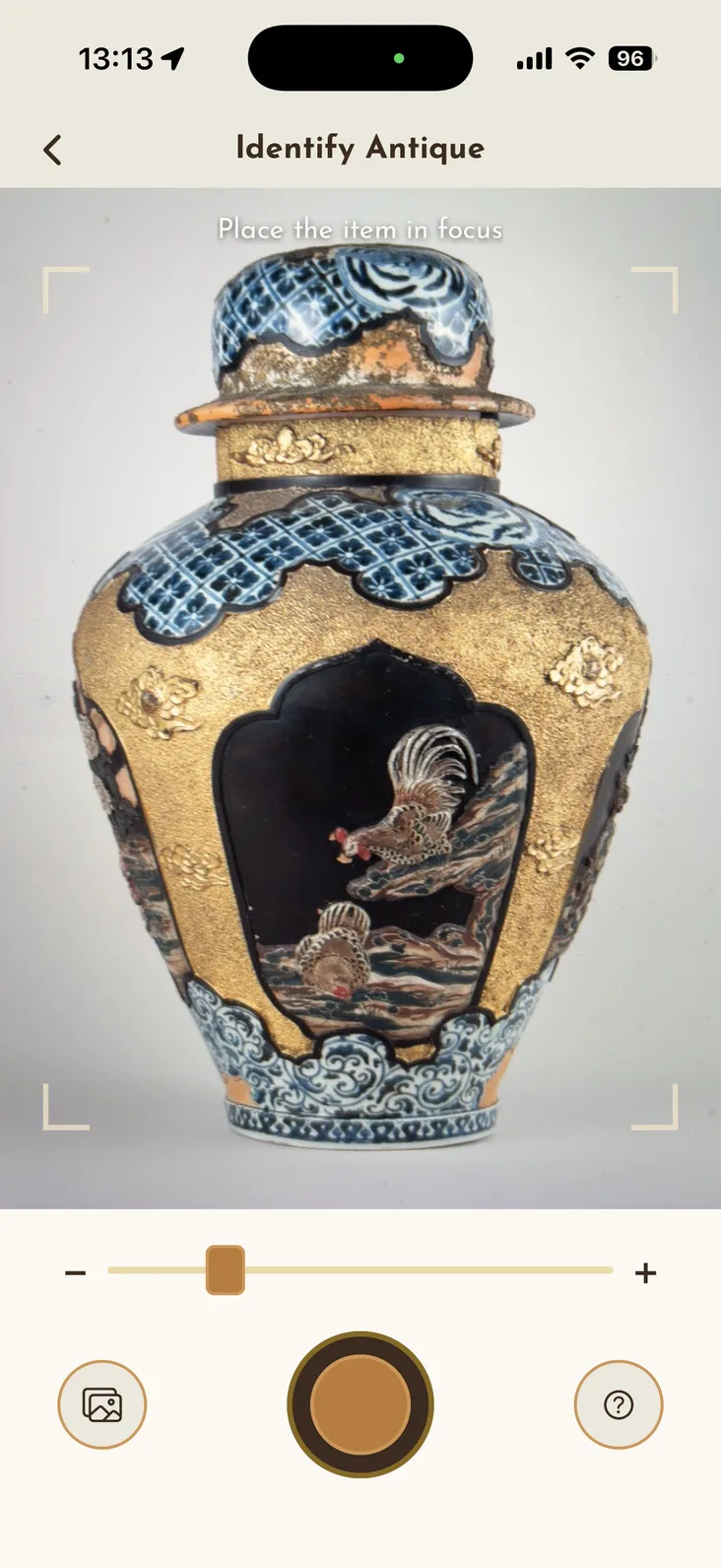
- Photograph your object — the whole piece, then the base or any mark. Good light beats a good camera.
- Read your free report — name, origin, period, rarity and an estimated value range with a confidence score. (Estimates, not certified appraisals — the app is honest about that too.)
Frequently asked questions
It's free to download and try — no account, no sign-up, no card required to start. Full, unlimited access is an auto-renewing subscription billed by Apple, with the price shown before you confirm, cancellable anytime in Apple ID → Subscriptions. See everything the app includes.
The manual method: read the marks, examine construction, place the style, read the wear, then check eBay sold listings. It costs nothing but time — about an evening per object — and our five-step guide teaches the whole process.
Real identification costs money per scan — AI vision processing plus live marketplace data. Apps either charge transparently, cap free scans, or make you the product through ads and data. A clearly priced subscription with a free trial is the most honest model available; how to judge any app is covered in the identifier app guide.
No. There's no sign-up and no personal profile — the app creates an anonymous, device-scoped session automatically so your collection persists. Full account and data deletion is available from Settings, as described in our Privacy Policy.
Your photo is sent to the identification service for analysis, and the result saves to your anonymous account so scan history and My Collection work. The App Store privacy label reports no data collected or linked to you; details in the Privacy Policy.
Free to find out. That's the whole point.
Free to try · No account needed · Cancel anytime
Download on theApp Store
On your computer? Scan with your iPhone camera to get the app.