Vintage Costume Jewelry Value: Which Pieces Are Worth Money
Updated November 2, 2026 · 10-minute read
Most vintage costume jewelry sells for small amounts. The pieces that bring real money are usually signed by a maker collectors know, such as Trifari, Miriam Haskell or Eisenberg, with every stone in place and a design buyers want. So vintage costume jewelry value comes down to three checks, in this order: the signature, the condition, and what similar pieces actually sold for.
Costume jewelry means pieces made with glass stones, plastic and plated metal instead of gold and real gems. This guide covers:
- What makes a piece worth money.
- Where the signature hides.
- Marks collectors look for, and fake ones.
- Plating stamps vs gold and silver.
- How to check real prices.
Sorting a whole box? Photograph each piece with Antique Snap for a first read, then use this page on the ones that look promising.
What makes costume jewelry worth money
The signature matters most, but a signed piece in bad condition can still sell for very little.
- A known signature. People search by maker, so signed costume jewelry is easier to price and easier to sell.
- The design. Some designs sell far better than others from the same maker. Collectors like figural brooches (pins shaped like animals, birds, flowers or people) and each maker's best-known lines, such as Trifari's crown pins.
- Condition. Missing stones, dark or cloudy stone backs, plating worn through to the metal, green corrosion, bent pins and repairs all lower the price.
- Completeness. A necklace with its matching earrings usually sells for more than the two would apart. A full matching set is called a parure. An original box helps too.
- Quality. Heavy pieces with crisp detail, and stones held by small metal claws (prongs), are usually better made than light, flat ones. Glue isn't a bad sign on its own, since plenty of good pieces used it.
Unsigned, chain-store and damaged pieces usually sell for small amounts, often in mixed lots. In most jewelry boxes, only a few pieces deserve a closer look.
Where to find the signature
Makers put their names where they won't show when the piece is worn. Marks are tiny and often worn, so use good light and a loupe, the small 10x magnifying lens jewelers use.
- Brooches: on the back near the pin or catch, stamped into the metal or on a small plate soldered on, called a cartouche.
- Necklaces and bracelets: on the clasp, the plate beside it, or a small tag hanging near it.
- Earrings: on the clip or screw back, or the back of the earring.
- Rings: inside the band.
A missing signature doesn't always mean no value. Early Miriam Haskell and early Eisenberg pieces were often unmarked, and marks wear off. Still, unsigned pieces are hard to pin to a maker, so they usually sell for less. Our guide to identifying antique jewelry shows how to read an unmarked piece from its clasp, stones and wear.
Costume jewelry marks collectors look for
These five names come up most often with collectors.
| Maker | Mark to look for | Worth knowing |
|---|---|---|
| Trifari | "KTF" on early pieces. "Trifari" with a crown over the T from about 1937, with a © added from about 1955. | Founded in New York in 1910. Crown pins and "Jelly Belly" animal pins with a clear Lucite belly are favorites. War-era pieces are often sterling. |
| Coro and Corocraft | "Coro", "Corocraft" or "Coro Craft". | New York, 1901 to 1979. Its Providence factory became the biggest costume jewelry plant in the world, so most Coro is common. Duettes, a brooch that splits into two clips, draw more interest. |
| Miriam Haskell | "Miriam Haskell" on a small plate, a hang tag or the clasp. | Her New York shop opened in 1926, and pieces were rarely signed before 1950. Beads and faux pearls are wired by hand onto pierced metal backs, never glued. |
| Eisenberg | "Eisenberg Original", "Eisenberg Ice", or just a script "E". | A Chicago dress company that sewed rhinestone trim onto its clothes in the 1930s. Early pieces are often unmarked, and the brand made new pieces in the 1990s. |
| Weiss | "Weiss" in block capitals or script. | Albert Weiss, New York, 1942 to 1971. Known for rhinestones. Often faked (see below). |
Kenneth Jay Lane (often marked KJL) and fashion houses such as Chanel, Dior and Schiaparelli are collected too. Monet, Napier and Sarah Coventry turn up in a lot of boxes. Their signature helps a piece sell, but it doesn't mean high value by itself.
Watch for fake and moved marks
Famous names raise the price, so famous names get copied. A mark alone doesn't prove a piece is genuine.
- Weiss. Fakes have circulated since the late 1980s. Collector guides note that many have a rough, textured back, while genuine Weiss is usually smooth and shiny.
- Miriam Haskell. Hang tags get moved from one piece to another, and Haskell clasps turn up on jewelry Haskell never made. A glued-on tag is a warning sign.
- Fashion houses. Be suspicious of a Chanel or Dior mark on a light, roughly finished piece.
- Reissues. Eisenberg brought the Ice name back with new pieces in the 1990s, which don't always match the older ones in quality.
If the mark says one thing and the piece says another, go with the piece. Good makers finished the back as neatly as the front. Our five-step identification method shows how to judge the object itself.
Plating stamps vs gold and silver stamps
Most costume jewelry is plated, with a thin coat of gold or silver color over cheaper metal. A few stamps mean solid gold or silver instead, so the piece is worth at least its metal. The US Federal Trade Commission's jewelry guides define these terms.
| Stamp | What it means | For value |
|---|---|---|
| 10K, 14K, 18K or 417, 585, 750 | Solid gold. The numbers are parts of gold per 1,000. | Rare on costume pieces. Have it tested. |
| Sterling or 925 | Solid silver, 92.5% pure. | Has silver value. Common on American pieces from World War II. |
| Vermeil | Sterling silver coated with gold. | Has silver value. |
| GF, Gold Filled, 1/20 12K GF | Gold bonded to base metal, at least 1/20 of the weight. | Little gold. Valued as jewelry. |
| RGP, Rolled Gold Plate, 1/40 | A thinner bonded layer, at least 1/40 of the weight. | Valued as jewelry. |
| GP, GE, Gold Plated, Gold Electroplate | A very thin layer of gold applied with an electric current. | No real gold value. |
| HGE, Heavy Gold Electroplate | Thicker electroplating, but still plating. | No real gold value. |
| No metal mark | Usually brass or pot metal, a soft gray alloy. | Normal. Value comes from maker, design and condition. |
Sterling is also a date clue. During World War II, base metals went to the war effort, and makers such as Trifari switched to sterling silver, as the Cooper Hewitt design museum describes. A Trifari, Coro or Eisenberg piece stamped Sterling often dates from those years. Our silver hallmarks guide covers other silver marks.
Quick age clues
A rough date helps you search and spot pieces newer than the seller claims:
- A © beside the maker's name on American pieces usually means about 1955 or later.
- Rainbow-coated rhinestones, called aurora borealis, date from the mid-1950s on.
- Screw-back earrings appear around 1900, clip-ons in the 1930s.
- A brooch pin that rests in a simple C-shaped hook usually points to the 19th century or early 1900s.
- "Pat." or "Des. Pat." with a number is a patent. Search the number on Google Patents to get the year.
Clasps get replaced, so use several clues together. Our antique jewelry guide has the full list of clasp dates.
How to check what it's really worth
Go by sold prices, not asking prices. Listings on Etsy and in online shops show what sellers hope to get.
- Search the maker plus a description, like "Trifari crown pin sterling" or "Coro Duette bird".
- Filter for sold listings. On eBay, tick "Sold items". Auction houses publish past results too.
- Match the condition. A brooch with a missing stone won't fetch what a perfect one did.
- Look at several sales and go by the middle of the range.
Don't clean pieces first. Water can get behind foil-backed rhinestones and darken them, and polishing wears plating away. A soft, dry brush is enough.
A professional appraisal usually costs $50 to $200 per item. It makes sense for a signed parure, a big Haskell piece, solid gold or silver, or jewelry you need valued for insurance. Our guide to free antique appraisals lists free options to try first, and what your antique is worth explains sold prices in more detail.
A whole jewelry box takes an evening
One brooch is easy. Forty pieces means forty rounds of finding the mark, working out the maker, ruling out a fake and digging through sold listings. Unsigned pieces are harder, because you can't search for a name that isn't there.
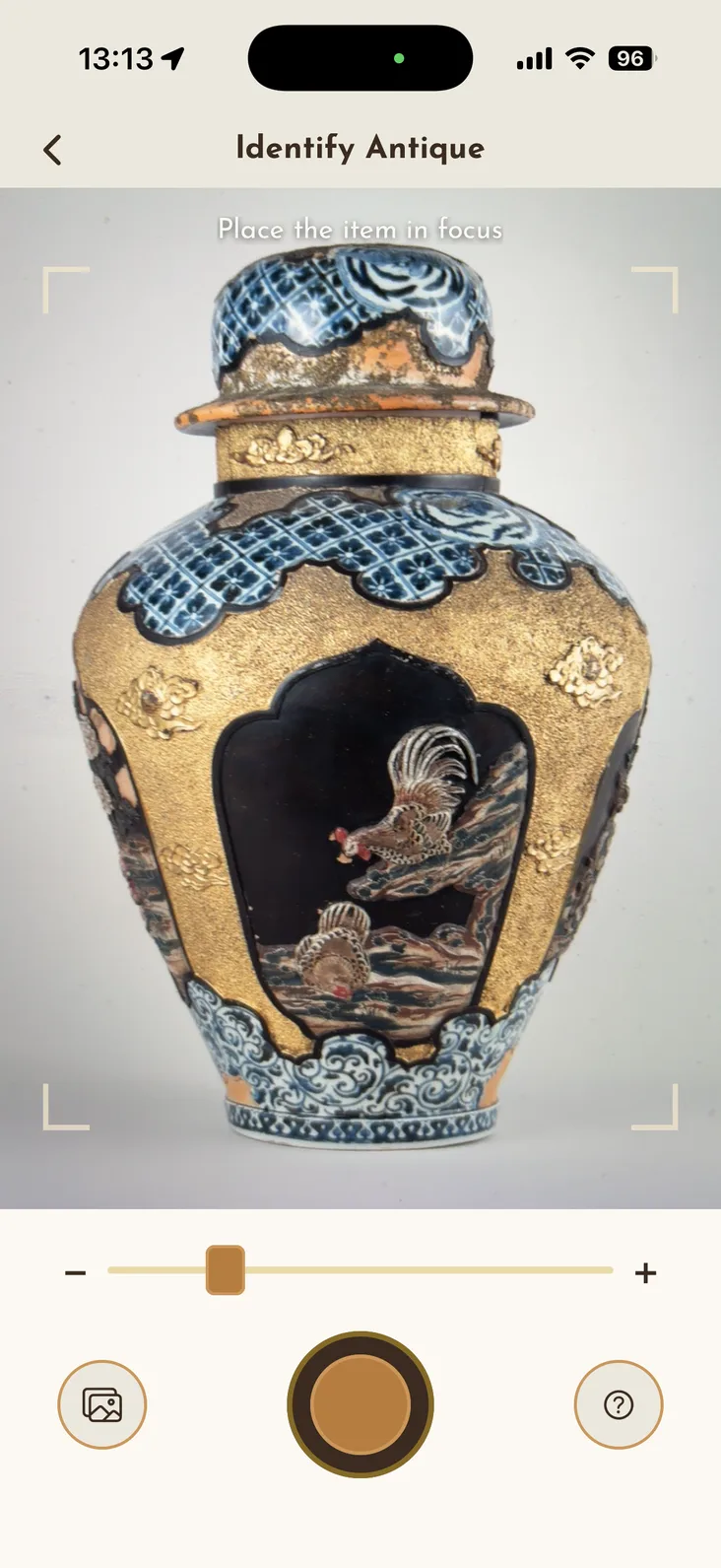
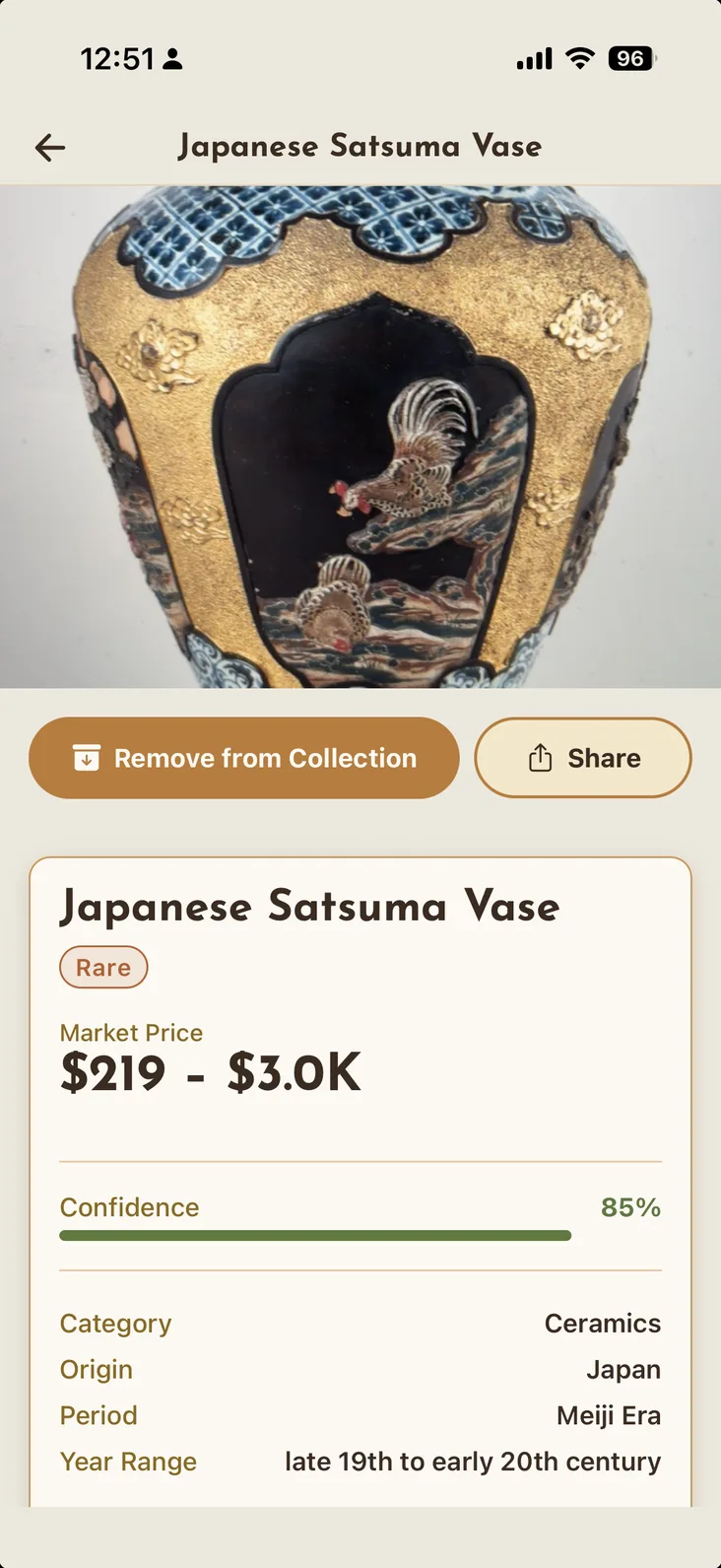
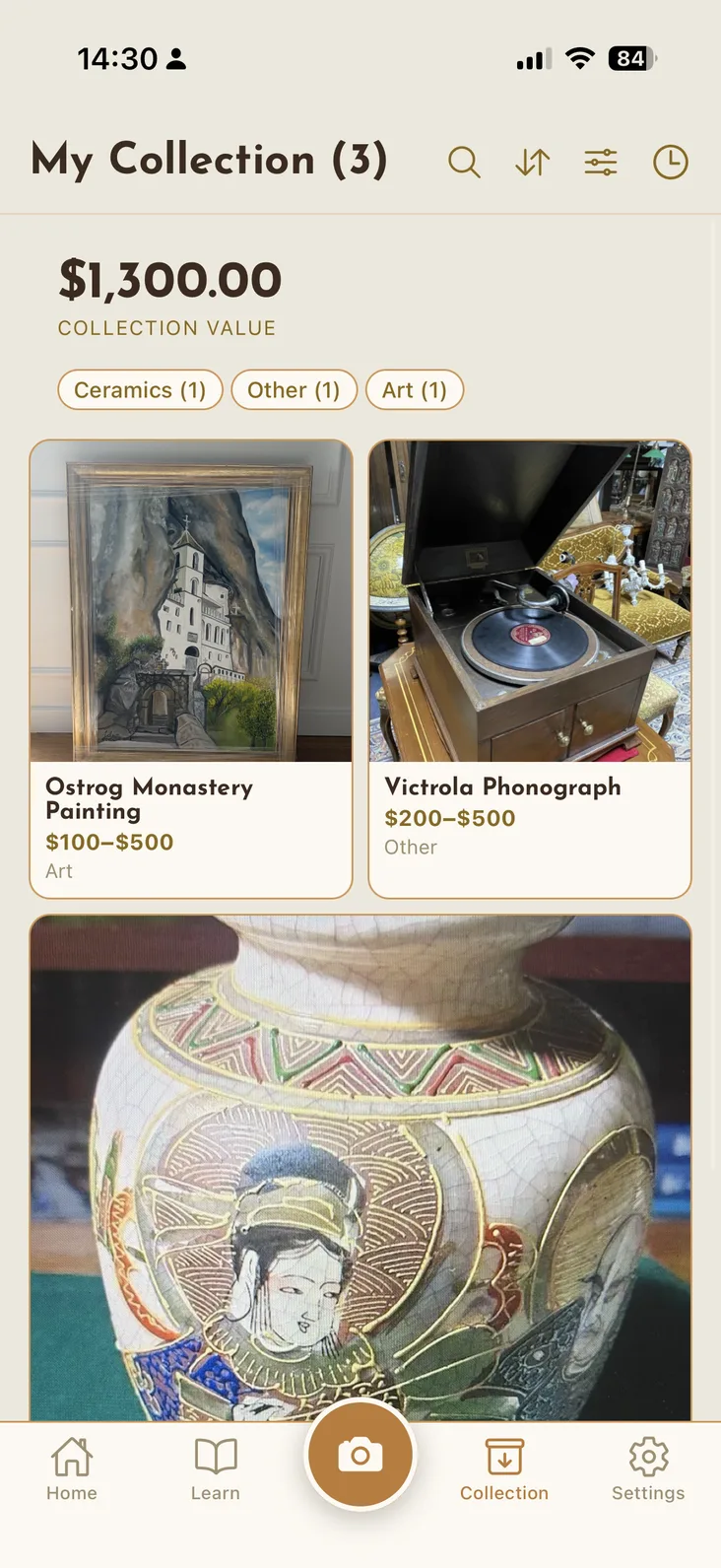
Antique Snap does that first pass from a photo. It names the piece and gives its likely period, materials, a rarity class and an estimated value range built from similar items listed on Etsy, eBay and auction houses, with a confidence score. If it can read a signature in the photo, the report shows it. Save each piece to My Collection for a running total of the whole box. Our identifier app guide explains what any good app should check.
Find the pieces worth a closer look.
Photograph a piece and see what it is, roughly when it was made and an estimated value range. Your first three identifications are free, and no account is needed.
How to sort a jewelry box with one photo per piece
- Photograph each piece on a plain, light surface in daylight. Skip the flash, which bounces off rhinestones and plating.
- Read the report. You get the name, period, materials, a rarity class and an estimated value range with a confidence score, then authenticity tips and condition notes.
- Low score? Photograph the back. A sharp close-up of the signature or the clasp usually scores far higher.
- Save it to My Collection. The running total shows which pieces deserve a sale of their own and which can go as a lot.
Values in the app are AI-generated estimates, not certified appraisals, based on similar items listed for sale at the time of the search. Because they come from listings, check sold prices before you sell anything that looks valuable. For insurance, probate or a sale, consult a qualified appraiser. Our guide to antique value apps explains how to read the range.
Frequently asked questions
Some of it is. Most unsigned and chain-store pieces sell for small amounts. Signed pieces from makers collectors know, such as Trifari, Miriam Haskell, Eisenberg and Weiss, can sell for much more, especially popular designs in good condition and complete sets. Check for a signature first, then compare sold prices. Our guide to what your antique is worth explains how.
Turn it over. A maker's signature on the back, the clasp or a small plate is the strongest sign. Then check the condition: every stone in place, bright foil behind the stones, plating that isn't worn through and no green corrosion. A Sterling stamp adds metal value. For signs of value in any antique, see how to tell if an antique is valuable.
Collectors look hardest for Trifari (especially the crown mark), Miriam Haskell, Eisenberg, Weiss, Coro Duettes and Kenneth Jay Lane, plus fashion houses such as Chanel and Dior. Popular names are also the ones that get faked, so check that the piece is as well made as the mark suggests. Our antique jewelry guide shows how to date a piece from its clasp and stones.
Usually less than signed jewelry, because buyers can't search for it by maker. There are exceptions. Early Miriam Haskell and early Eisenberg pieces were often unmarked, and well-made older pieces with good stones still sell. Without a mark, judge the construction, condition and age clues, or try the free ways to get an opinion before you pay for an appraisal.
Yes, as a first pass. Antique Snap identifies a piece from a photo and gives its likely period, materials, an estimated value range and a confidence score, and it shows the signature when it can read one. It can't test metal or confirm a stone. Values are estimates, not appraisals, so read how app values work first.
Turn the jewelry box into a list with values.
Free to try · No account needed · Cancel anytime


On your computer? Scan with your phone camera to get the app.