How to Tell If an Antique Is Valuable
Updated October 3, 2026 · 6-minute read
To tell if an antique is valuable, look for a maker's mark or signature, good quality work, fine materials, signs that it's rare, and good original condition. A piece with several of these is worth a closer look. Age on its own isn't enough: plenty of hundred-year-old things are worth very little, because a lot of them survive and not many people want them.
This guide goes through the signs one by one, then the warning signs that a piece probably isn't valuable, and what to do next either way. For a quick answer on a specific piece, photograph it with Antique Snap.
8 signs an antique may be valuable
1. It has a maker's mark, signature or label
A name changes everything. A marked piece can be traced, compared and priced, and pieces by well-known makers sell for far more than similar unmarked ones. Check the base, the back, inside drawers and lids, and the underside of rims. Our guides cover where marks hide on silver, pottery and porcelain, jewelry and furniture.
2. The quality is obvious when you look closely
Good things were made carefully. Look for crisp carving, fine and even painting, tight joints, heavy and well-finished metal, and details on parts nobody normally sees. A cheap piece often looks fine from a distance and rough up close. An expensive one usually gets better the closer you look.
3. It's made from good materials
Solid silver and gold, fine porcelain, quality hardwoods, real gemstones and hand-blown glass all add value. So check what it's made of. Silver-colored metal marked "sterling" or "925" is a different thing from silverplate. A ring stamped 18K is not the same as one marked GF. Material alone can decide whether something is worth a few dollars or a few hundred.
4. It's rare, and people want it
Rarity only matters when there are collectors who want the thing. Short production runs, unusual colors or variations, pieces that rarely survived intact, and work by small, sought-after makers are all good signs. A rare object nobody collects can still be hard to sell.
5. It's in good, original condition
Condition moves value more than almost anything. Chips, cracks, missing parts, heavy repairs and replaced pieces lower the price. Original finish, original hardware and complete sets help. Wear that fits the piece's age is normal and usually fine. Damage is not.
6. It hasn't been "improved"
Refinished furniture, polished-away patina on bronze, re-plated silver and heavily cleaned paintings can all be worth less than they were before. If you think a piece might be valuable, don't clean, polish, strip or repair it until you know what it is.
7. It has a history you can show
Paperwork adds value. An old receipt, a letter, a photograph of the piece in a family home in 1920, or a label from a known collection is called provenance, and it can make buyers much more confident. Family stories help too, especially if you can back them up.
8. It's in fashion right now
Value follows taste. Mid-century modern furniture and design have been in demand for years, while large, dark Victorian furniture is much less wanted than it used to be. Some categories rise and fall within a decade. That's why current sold prices matter more than what something was "always worth".
Signs it probably isn't very valuable
- It was made in huge numbers for collectors. Collector plates, mass-produced figurines and "limited editions" from the 1970s to the 1990s were sold as investments, but so many were made that most sell for very little today.
- It's a reproduction. Perfectly even machine work, modern screws, bright unworn metal and "Made in" stickers on a supposedly old piece point to a later copy.
- It's badly damaged or heavily repaired, unless it is genuinely rare.
- It's common and widely available. If you can find dozens of identical ones for sale today, the price will reflect that.
- The only evidence of age is a story. "It was my great-grandmother's" is lovely, but it doesn't make an object old or valuable on its own.
Quick checks by category
- Furniture: hand-cut joints, solid wood, original finish and hardware. More in our furniture guide.
- China and porcelain: a clear maker's mark, light showing through thin porcelain, no chips or hairline cracks.
- Silver: sterling marks or hallmarks rather than EPNS or "silverplate".
- Jewelry: karat or platinum stamps, older stone cuts, signed costume pieces.
- Glass: a signature on the base, a ground or polished mark where the glass was attached during making, and a clear ring when gently tapped.
- Clocks and watches: the maker's name on the movement, not just the dial, and all original parts.
What to do next
- Don't clean or repair it yet. You can always clean later. You can't undo it.
- Photograph it well, including the base, back and any marks.
- Identify it. Our five-step identification method works on any object.
- Check what similar pieces have sold for. Our guide to what your antique is worth shows how.
- Get a professional opinion if the signs point to real value. Our free appraisal guide covers where to start without paying.
Checking one piece takes an evening
Going through all of this for one object, looking for marks, working out the name and searching for sold prices, easily takes an evening. With a houseful of inherited things, it's a project for months, and the valuable pieces are often not the ones you'd expect.
Antique Snap gives you a first answer from a photo: what the piece is, its period, a rarity class from Common up to Museum Piece, and an estimated value range from similar pieces for sale right now, in about fifteen seconds. That makes it easy to find the few pieces worth a closer look.
Worth keeping, or worth a few dollars?
Photograph it and Antique Snap names it, grades its rarity and shows an estimated value range. Free to try, no account needed.
Download on theApp StoreHow to check a piece with one photo
- Photograph the whole piece, then the base, back or any mark.
- Read the report. You get the name, origin, period, a rarity class and an estimated value range, with a confidence score that tells you how sure the result is.
- Compare the similar pieces from Etsy, eBay and auction houses to see where yours fits.
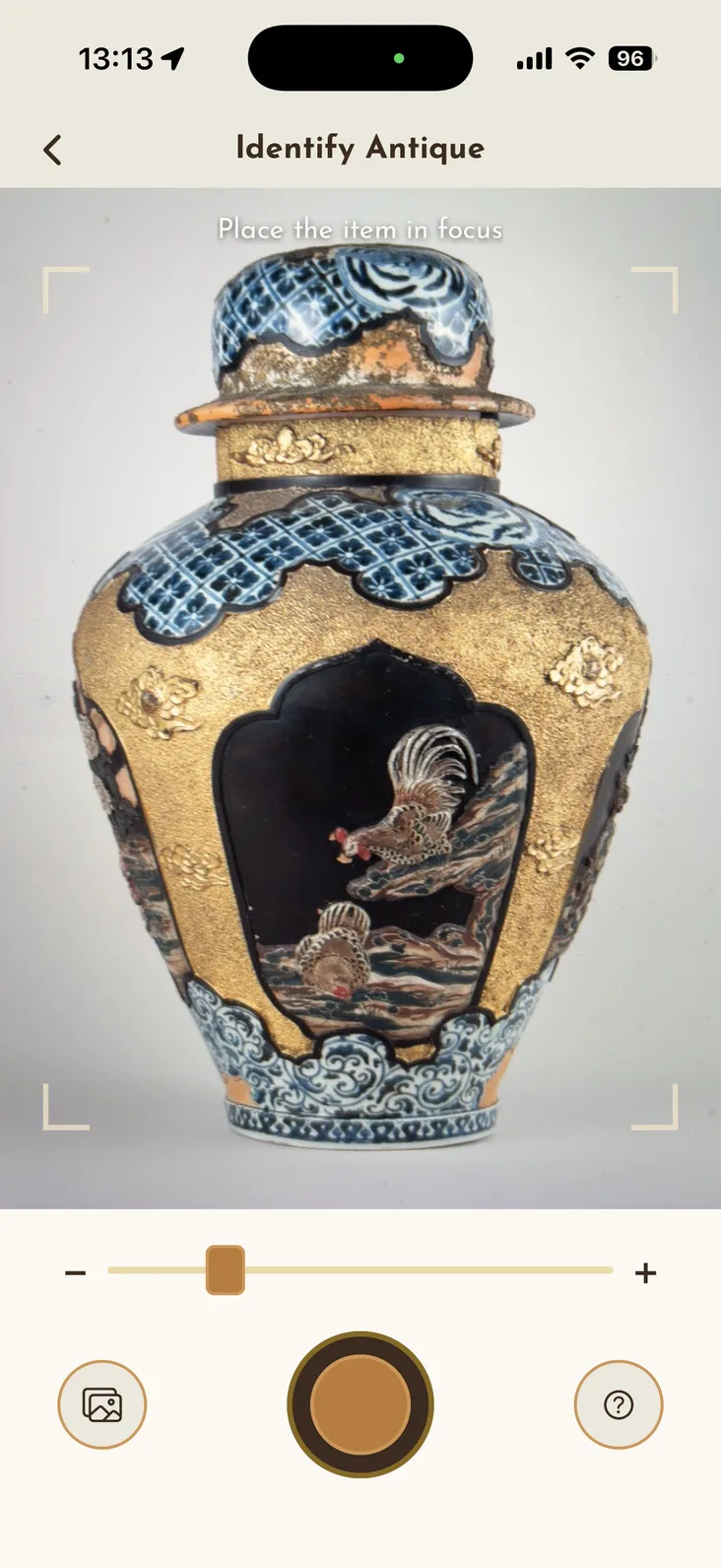
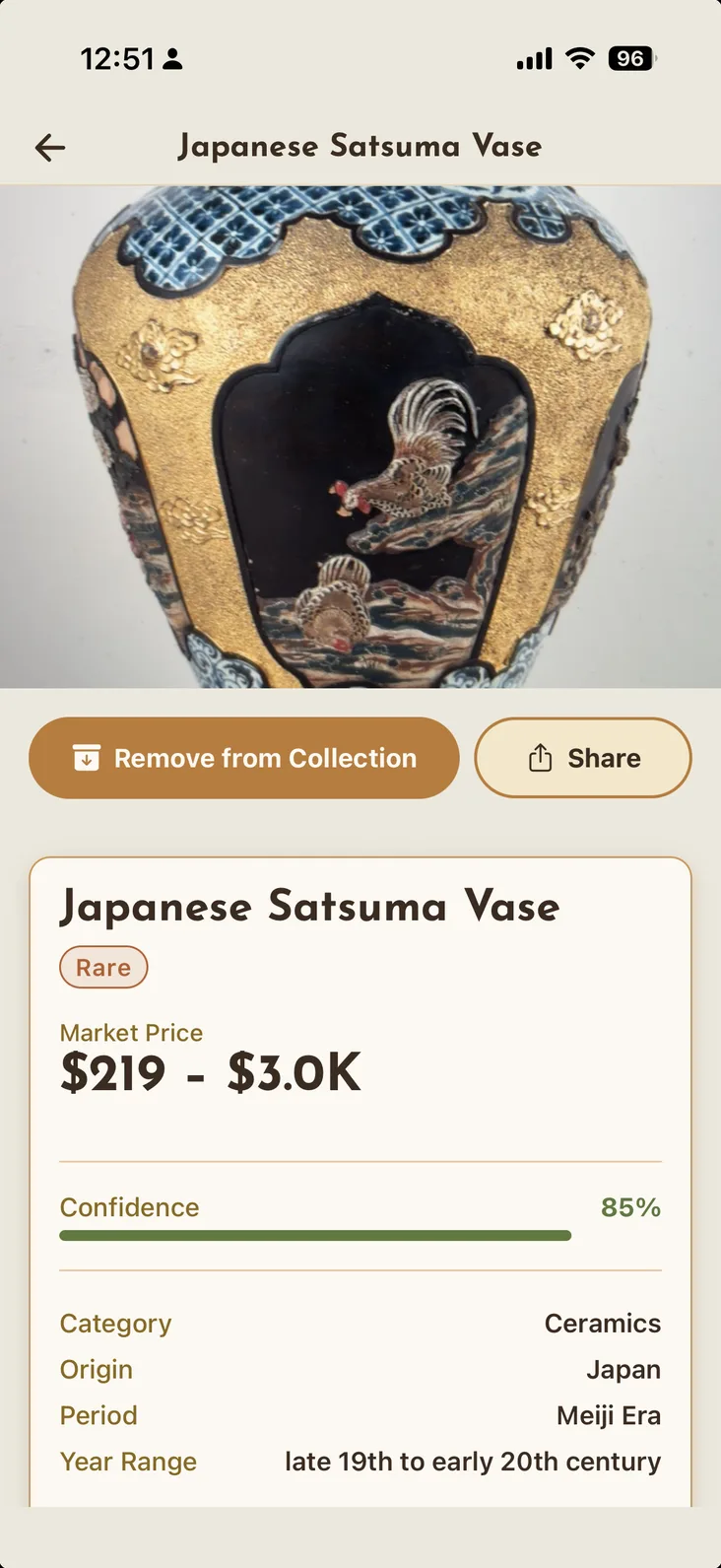
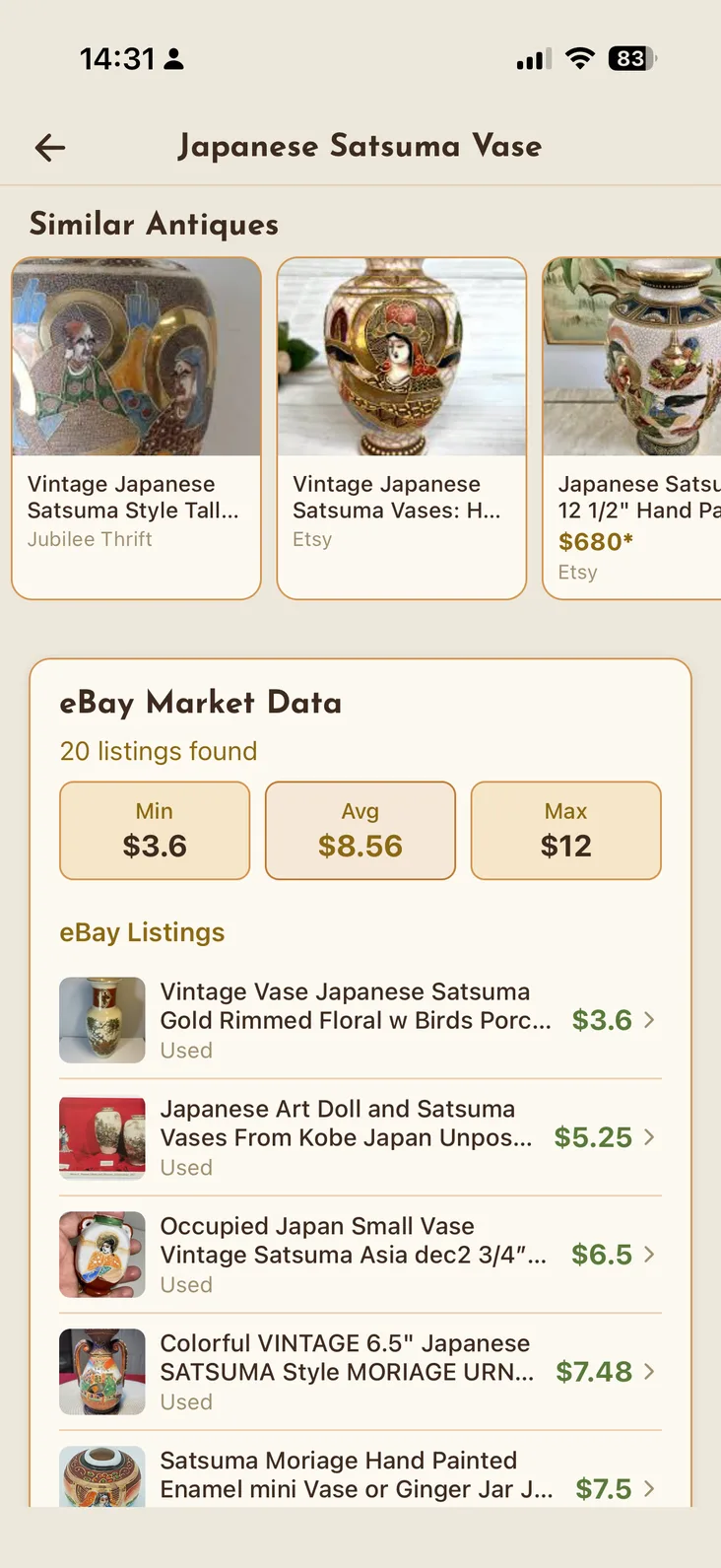
Values in the app are AI-generated estimates, not certified appraisals, based on similar items listed for sale at the time of the search. For insurance, probate or a sale, consult a qualified appraiser.
Frequently asked questions
Look for a maker's mark or signature, high quality work, fine materials such as solid silver or gold, signs of rarity, and good original condition. Then check what similar pieces have actually sold for recently. Several good signs together are worth following up. Our guide to what your antique is worth explains how to check prices.
No. Age is only one part of value. Many objects over 100 years old survive in large numbers and few people collect them, so they sell for little. A well-made, sought-after piece from the 1960s can be worth more than a common Victorian one. Rarity, quality, condition and demand matter more. Start by finding out what you have.
No. Cleaning, polishing, refinishing or repairing can lower the value, sometimes a lot. Original finish and natural aging are part of what buyers pay for. Dust it gently if you must, photograph it as it is, and get it identified first. Our furniture guide explains why original finish matters.
There is no single answer, because value depends on the specific piece. In general, signed work by sought-after makers, fine silver and gold, early or rare porcelain, quality furniture with original finish, and good art tend to hold value best. Mass-produced collectibles usually don't. Our antique price guide shows how to look up real prices.
An app can give you a fast first answer. Antique Snap identifies the piece from a photo, grades its rarity and shows an estimated value range from similar pieces for sale, with a confidence score. It is a good way to sort a lot of items quickly. For important pieces, follow up with a qualified appraiser. See how app values work.
Find out which ones are worth something.
Free to try · No account needed · Cancel anytime
Download on theApp Store
On your computer? Scan with your iPhone camera to get the app.